
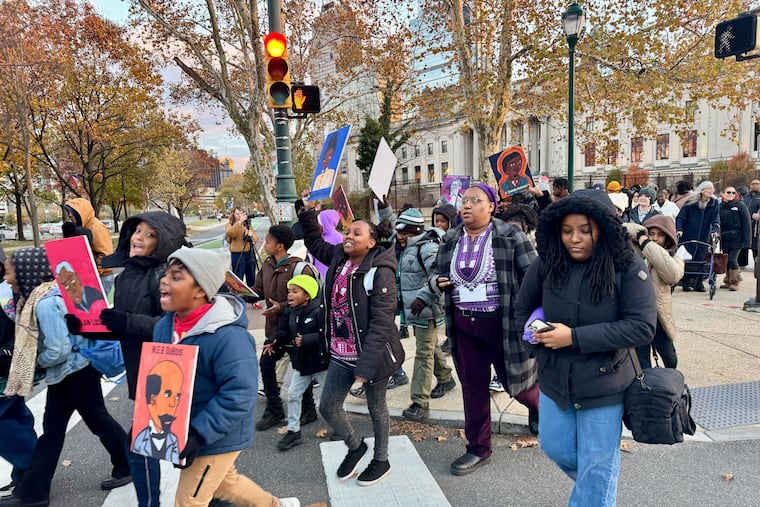
3,000 people protested in 1967 against conditions for Black students in Philadelphia, as recalled by those who experienced it.
In a poignant demonstration of remembrance and advocacy, students from the Jubilee School in West Philadelphia commemorated the 58th anniversary of a historic student walkout that took place on November 17, 1967. This significant event saw approximately 3,000 youth and their supporters leave schools across the Philadelphia School District to protest the treatment of Black students and demand essential changes in educational policy.
On a brisk November day, a small group of students assembled in Center City, chanting slogans and holding handmade signs that echoed the sentiments of a generation nearly six decades prior. The march was not only a tribute to the original participants but also a call to action for ongoing advocacy for Black history and educational equity.
Historically, the 1967 walkout represented a critical turning point in the struggle for civil rights and school integration in the United States. During this recent observance, Jubilee students engaged in an extensive study of the prior walkout, conducting research, creating poetry, and planning a route that culminated at the Free Library’s central branch. This path traced from the original headquarters of the School District of Philadelphia, symbolizing a journey toward greater awareness and inclusion.
The event was underscored by significant milestones, including Philadelphia’s recognition twenty years ago as the first school district in the nation to mandate the teaching of African American history as a graduation requirement. This context emphasized the ongoing importance of the original walkout in shaping educational practices.
The commemoration included special acknowledgments of four former students from Masterman School who facilitated the installation of a permanent historical marker recognizing the significance of the 1967 protest. The dynamic atmosphere was enhanced by energetic chants led by students like Khaseem Bailey, emphasizing the continued relevance of the issues faced by their predecessors.
Walter Palmer, now 91, one of the strategists behind the original walkout, reflected on the years of preparation that preceded that historic day. He noted that Black students had become the majority in Philadelphia schools yet faced significant inequality, prompting the need for action. The organizers had compiled a list of 25 demands aimed at addressing these disparities, illustrating the profound impact of the student-led movement.
The peaceful demonstration devolved into chaos when law enforcement intervened, leading to hundreds of arrests and injuries, starkly contrasting the activists’ intentions. This past serves as a reminder of the ongoing struggles against racial injustice and the vital importance of ensuring that Black history is remembered and taught accurately.
As students continue to advocate for their rights and honor the past, they underscore the message that education is not only a path to knowledge but also a platform for justice and equality—an endeavor that must persist in the face of adversity. The legacy of the 1967 walkout remains a powerful inspiration for generations of youth committed to fighting for their rights and for future educational equity.
This article was produced by Media News Source.


