61 Years After Bloody Sunday, Concerns Rise Over Voting Rights and Calls for Action Intensify
SELMA, Ala. — In a significant commemoration of a critical milestone in the history of civil rights, thousands gathered in Selma, Alabama, on the weekend marking 61 years since the infamous Bloody Sunday, when state troopers violently confronted Civil Rights marchers on the Edmund Pettus Bridge. This event, which occurred on March 7, 1965, became a catalyst for the passage of the Voting Rights Act, designed to eliminate barriers preventing Black Americans from exercising their right to vote in the Jim Crow South.
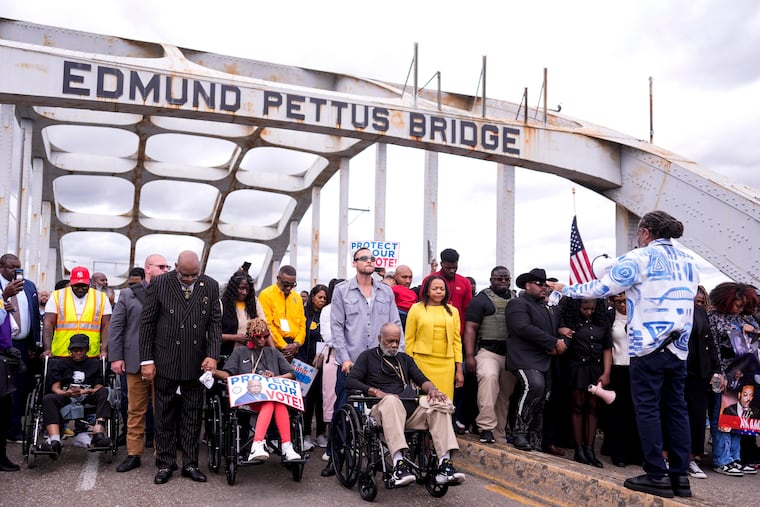
The anniversary festivities transpired throughout the weekend, culminating in a symbolic march across the bridge on Sunday. These events unfolded against a backdrop of renewed concerns regarding the future of the Voting Rights Act, particularly as the U.S. Supreme Court deliberates on a pivotal case that could potentially restrict provisions fundamental to ensuring equitable districting for minority voters. The implications of such a ruling could have far-reaching consequences, especially for congressional and local districts aimed at preserving minority representation.
Among the attendees was Charles Mauldin, one of the marchers who endured violence on Bloody Sunday. Reflecting on the legacy of that day, Mauldin articulated his apprehension regarding the possibility of rolling back the gains achieved over the past six decades. Numerous Democratic officials, civil rights advocates, and visitors convened to honor this historic moment while simultaneously issuing urgent calls for action to safeguard voting rights.
Maryland Governor Wes Moore, addressing the congregation at the historic Tabernacle Baptist Church, emphasized the necessity of perseverance in the face of challenges. He stated that the legacy of those who marched across the Edmund Pettus Bridge mandates action rather than passivity as contemporary freedoms face threats. In his remarks, Illinois Governor JB Pritzker echoed concerns about the rise of racism in America, attributing blame to the actions of the Trump administration and its impact on the judicial landscape concerning voting rights.
The Supreme Court is anticipated to reach a decision soon regarding a Louisiana case assessing the influence of race in congressional redistricting. A ruling that limits this influence could empower Republican-controlled states to redraw district lines, potentially eroding majority Black and Latino districts that often lean Democratic. This development raises significant questions about fair representation in the political landscape.
U.S. Representative Shomari Figures, who benefited from a federally mandated redrawing of districts to amplify Black voter representation, highlighted the monumental legacy of Selma and the Voting Rights Act in shaping American democracy. As several thousand participants marched across the Edmund Pettus Bridge, they symbolized the enduring fight for civil rights and the ongoing struggle for equitable representation in government.
Historically, the march of 1965, led by figures like John Lewis and Hosea Williams, motivated a vast movement for equality. As participants today retraced those steps, they reaffirmed their commitment to uphold the principles for which the original marchers so valiantly fought.