Penn Carey Law pauses scholarships and closes equal opportunity office, prompting backlash over claims of racial discrimination.
The Pennsylvania Human Relations Commission is poised to review the recent actions taken by the University of Pennsylvania (Penn) Law School, which has decided to pause its scholarship program honoring Sadie Tanner Mossell Alexander, the institution’s first Black female graduate, and close its equal opportunity office. This announcement has sparked significant backlash among students, alumni, and various community organizations.
Chad Dion Lassiter, the executive director of the Pennsylvania Human Relations Commission, expressed his concerns, suggesting that the decision appears to constitute a racial setback for the university community. Lassiter, who earned a master’s degree in social work from Penn in 2001 and co-founded the Black Men at Penn group, indicated he has received numerous inquiries from both the Penn community and the broader Philadelphia area, urging the Commission to take action. While the Commission can hold public meetings to discuss such matters, it lacks the authority to impose penalties on the university.
The law school’s announcement last week has led to intensified criticism. The Penn Carey Law School’s executive board of the Black Law Students Association condemned the school’s actions as a significant regression from its purported commitment to fostering equity, inclusion, and community support. The board members articulated a strong disapproval of the decision, asserting that it compromises the school’s historical commitment to Black students, who have traditionally faced numerous educational barriers.
The timing of these developments is notable, as they coincide with nationwide pressures from the Trump administration aimed at disbanding diversity, equity, and inclusion initiatives at universities. This environment compelled Penn and several institutions across the country to review their diversity programs, particularly after the U.S. Supreme Court’s decision against race-based admissions practices.
In a statement, Dean Sophia Z. Lee acknowledged the closure of the equal opportunity office but emphasized that the school remains committed to ensuring access and opportunity. She indicated that the principles upheld by the office will be integrated into broader initiatives. The Sadie T.M. Alexander scholarships, which began in 2021, were specifically designed to support incoming law students focused on racial justice, in the wake of heightened discussions surrounding racial inequities.
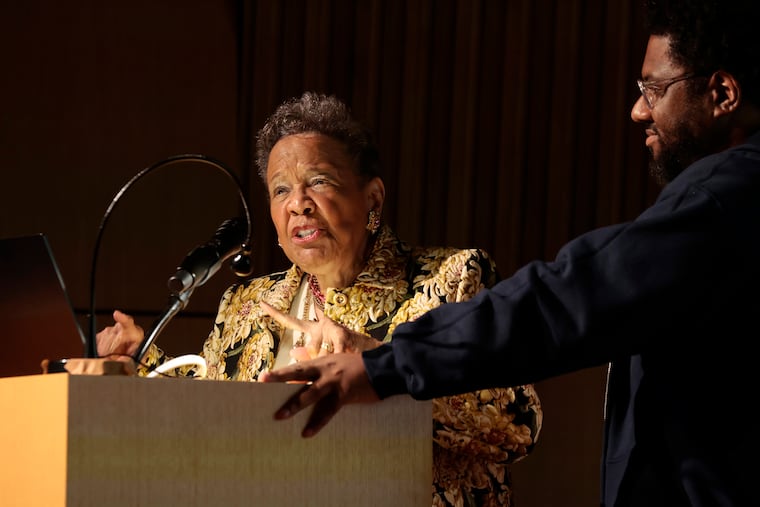
Rae Alexander-Minter, the daughter of Sadie Alexander, publicly criticized the school’s decision, describing it as “shocking.” She expressed her intention to reach out to Penn regarding the scholarship’s future and highlighted a troubling historical cycle regarding racial equity in education.
The recent developments have drawn criticism not only from student organizations but also from the American Association of University Professors at Penn and the Philadelphia branch of the NAACP, calling for the university to reconsider its decisions. They highlighted a fear that this action signifies a deeper issue—that the institutional support for marginalized students is deemed expendable. The pressure on the university to affirm its commitments has increased amid widespread concern regarding the implications of these policy shifts on future generations of Black students pursuing legal education.
This situation continues to evolve, with stakeholders from various sectors closely monitoring Penn’s next steps as it navigates this contentious dialogue over diversity and equity within its academic framework.