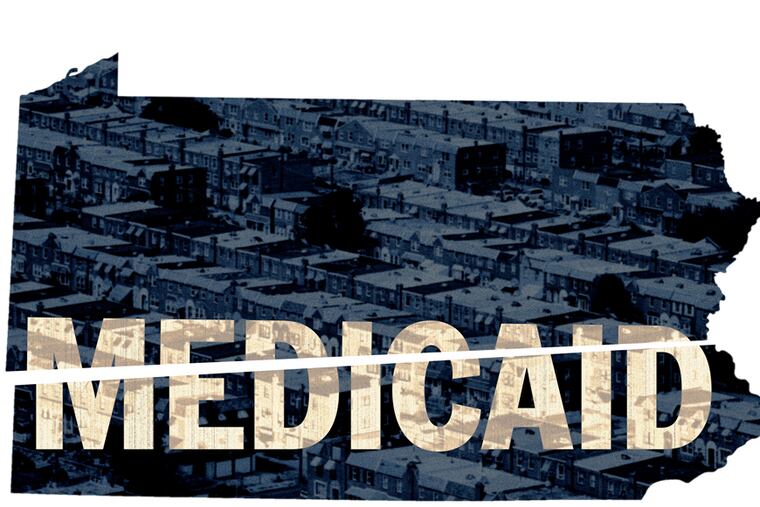
Philadelphia-area hospitals with the highest number of Medicaid patients in the past year have been identified.
Recent adjustments to Medicaid rules in Pennsylvania, particularly those stemming from the One Big Beautiful Bill Act, have raised alarm among local hospitals, with expectations of significant financial repercussions. This legislation, championed by President Donald Trump, targets Medicaid—an essential health insurance program for low-income residents. With over 840,000 individuals in Southeastern Pennsylvania relying on Medicaid, approximately three-quarters residing in Philadelphia and Delaware County, the stakes are high.
Among the most consequential changes are the introduction of new work requirements and restrictions on states’ abilities to generate additional funds from the federal government for Medicaid. While these modifications may not take effect for several years, their potential impact on the healthcare landscape remains uncertain, prompting concerns among hospital administrators regarding future reimbursements and the sustainability of services.
To shed light on local hospitals’ financial exposure to Medicaid, data analysis provided insights on hospitals based on various metrics: the percentage of revenue derived from Medicaid, overall Medicaid revenue, the proportion of patients receiving Medicaid, and total patient counts. The analysis yielded diverse results, indicating that some large hospitals—though not heavily reliant on Medicaid for revenue—could face substantial fiscal losses due to altered reimbursement rates. For example, the Hospital of the University of Pennsylvania ranks 16th out of 29 local hospitals based on Medicaid revenue percentage, yet it commands the second-largest total Medicaid revenue, following Temple University Hospital.
The examination of patient admissions further elucidates the critical role Medicaid plays in hospital operations. Jefferson Einstein Philadelphia emerges as a leader in the percentage of Medicaid admissions, highlighting its heavy dependency on the program. However, when considering absolute numbers, Jefferson Einstein ranks third behind Temple University and the Hospital of the University of Pennsylvania. Such variances emphasize the complexity of reliance on Medicaid across different healthcare facilities.
As the changes outlined in the One Big Beautiful Bill Act loom on the horizon, local hospitals are bracing for an uncertain future. The financial implications could reshape the healthcare landscape in Southeastern Pennsylvania, affecting not only hospital operations but also the access to healthcare services for countless residents. Continued monitoring and careful analysis will be essential in understanding the full ramifications of these legislative changes.
Media News Source