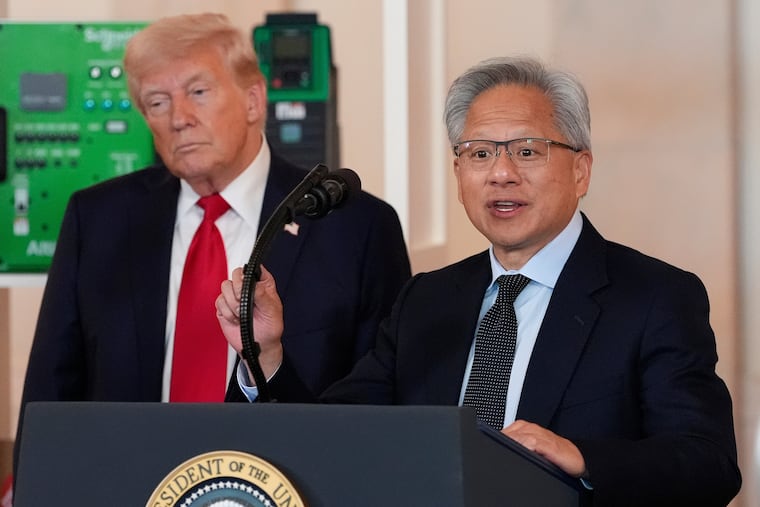
Trump’s chip deal establishes new pay-to-play guidelines for U.S. exporters.
President Donald Trump’s recent agreement with major American chip manufacturers, Nvidia and Advanced Micro Devices (AMD), has introduced a novel approach to U.S. trade policy. Under this arrangement, both companies have consented to remit 15% of their revenue from sales of specific computer chips in China to the U.S. government in exchange for permission to export these products.
This unprecedented move indicates a shift in the longstanding U.S. policy concerning international trade and economic relations, particularly with China. Notably, the agreement raises complex legal and constitutional questions, specifically around the prohibition of export taxes. Experts in trade and national security are expressing concerns that this model could lead to similar agreements with other tech companies, fundamentally altering the dynamics between American businesses and the federal government.
Scott Kennedy, an authority on China and a senior adviser at the Center for Strategic and International Studies, highlighted the potential ramifications of this new trade tactic, suggesting that it marks a significant departure from traditional interactions between the government and corporations. Liza Tobin, previously the China director on Trump’s National Security Council, characterized the deal as a “dangerous precedent,” arguing it undermines national security by commodifying sensitive technology.
Proponents of the agreement argue that it creates a symbiotic relationship, harnessing the strengths of U.S. innovation while ensuring that the government benefits from American companies’ successes abroad. During a White House press briefing, Trump outlined his expectations from Nvidia, framing the deal as a quid pro quo for allowing the sale of their H20 chip in China, which had faced restrictions earlier in his administration. This change unlocks significant revenue opportunities for both companies, potentially amounting to billions of dollars, while also obligating them to contribute a substantial portion of that revenue to the U.S. government.
Despite the financial benefits outlined, legal experts have raised flags regarding the constitutionality of these arrangements. Although shareholders may consider the deal economically prudent due to the access it grants to the lucrative Chinese market, they might also explore legal avenues if they believe executives compromised potential revenue through these agreements.
The response from leading industry groups, such as the U.S. Chamber of Commerce and the Semiconductor Industry Association, has been notably subdued. No immediate statements were issued after the details of the deals emerged, suggesting a reluctance to publicly critique the administration’s approach.
Historically, U.S. trade policies have maintained a cautious stance toward China, particularly concerning technology transfer and national security. The new agreements with Nvidia and AMD signify a departure from years of bipartisan policy aimed at tightening restrictions on advanced technology exports. As the relevance of artificial intelligence has surged, so too has the urgency to negotiate favorable terms with China, balancing competitiveness with security.
In conclusion, while Trump and his allies trumpet these deals as a means of ensuring that American innovation remains dominant, critics warn that they could unintentionally enable China’s advancements in AI and related technologies. The extent to which this new policy will reshape U.S.-China relations and the landscape of global technological competition remains to be seen. As the dialogue around these issues continues, stakeholders across various sectors will be closely monitoring the implications of Trump’s trade policy adjustments, poised at the intersection of economic opportunity and strategic concerns.