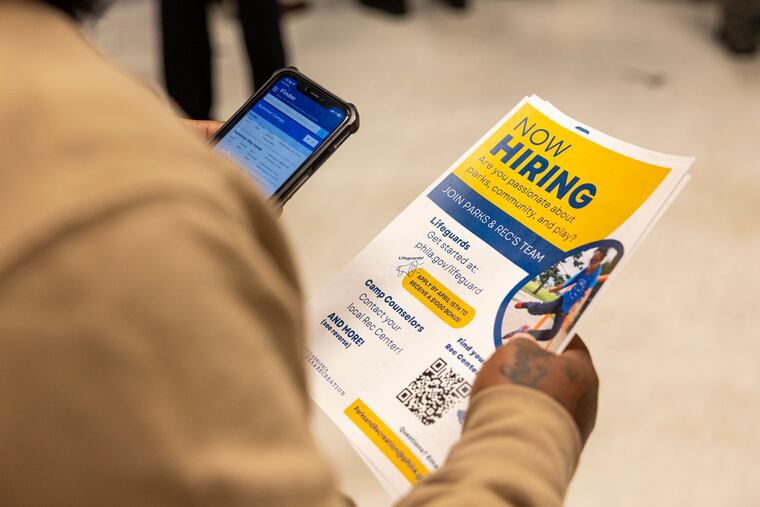
U.S. jobless benefit applications decreased last week, staying within a historically healthy range.
The latest data from the Labor Department indicates that the number of Americans filing for jobless benefits has experienced a slight decline, marking a continuation of the historically low figures observed since the United States began its economic recovery from the COVID-19 pandemic. For the week ending August 9, initial jobless claims fell by 3,000 to a total of 224,000 applications. This figure is notably lower than the 230,000 new applications anticipated by economists.
These weekly claims serve as an important barometer of layoffs across the United States, and they have predominantly remained within a historically robust range of 200,000 to 250,000 since the initial economic disruptions of spring 2020. This low level of claims suggests that while the economy faces other challenges, the immediate risk of widespread layoffs remains contained.
Recent economic scenarios have included a troubling jobs report for July, which revealed that U.S. employers added only 73,000 jobs, falling far below the 115,000 forecast by analysts. Additionally, there were significant downward revisions in the job growth estimates for both May and June, which collectively reduced the employment figures by 258,000. As a result, the unemployment rate has subtly increased to 4.2% from the previous rate of 4.1%.
In light of dissatisfaction with these job statistics, President Trump has taken notable actions, including the recent dismissal of the head of the Bureau of Labor Statistics, amid accusations of data manipulation for political gain. Following this, Trump nominated E.J. Antoni, a chief economist at the conservative Heritage Foundation, to lead the BLS.
While layoffs remain low overall, signs of deterioration in the labor market have emerged. Employers advertised 7.4 million job vacancies in June, a decrease from 7.7 million in May, and the number of workers willingly leaving their jobs dropped to its lowest point since December, indicating declining confidence in finding new positions.
Prominent companies such as Procter & Gamble, Starbucks, and Google have announced job cuts, reflecting an increasingly cautious approach to hiring influenced by economic uncertainty, in part due to tariff policies. Economists have suggested that ongoing trade tensions and tariff implementations may deter employers from expanding their workforces, contributing to the observed volatility in labor market data.
Recent government data also revealed concerning trends in inflation, with wholesale prices unexpectedly rising. This trend is further complicated by fears that current tariff policies could continue to contribute to inflationary pressures on the economy.
As the economy navigates these complexities, the shifting landscape of job availability and the dynamics of jobless claims will be critical indicators for both policymakers and economists watching for signs of economic stabilization or further distress. Analyzing these trends gives valuable insights into the current employment landscape and future economic forecasts.
Media News Source