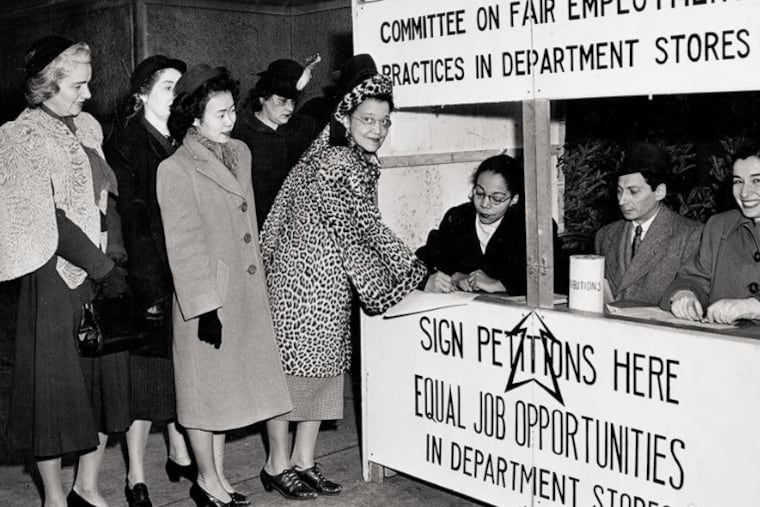
Sadie T.M. Alexander caught in conflict over control of American historical narratives.
In recent years, the ongoing struggle to preserve the legacy of African American history has intensified, as demonstrated by efforts to restore the Henry Ossawa Tanner House, a historic residence situated in Philadelphia’s Strawberry Mansion neighborhood. Christopher R. Rogers, a visiting assistant professor of writing at Haverford College, has dedicated nearly four years to this initiative, partnering with the organization Friends of the Tanner House, which is actively working to renovate the home once occupied by the illustrious Black artist Henry Ossawa Tanner. Tanner lived and created some of his most significant works in the house from 1872 to 1888, and despite having relocated to Paris, the Tanner House continued to function as a hub for Philadelphia’s Black intellectual community.
This site holds particular importance as it was also home to Tanner’s niece, Sadie Tanner Mossell Alexander, who made history as the first Black woman to earn a law degree from the University of Pennsylvania in 1927. Alexander’s trailblazing path as a civil rights lawyer in the mid-20th century exemplifies the indelible mark she left on both her community and American history.
The recognition of Alexander’s achievements, however, has sparked controversy. Recently, city officials proposed the erection of a statue honoring her in front of the Municipal Services Building, coinciding with the removal of the divisive statue of former Mayor Frank Rizzo. This move reflects a growing momentum towards inclusivity in historical representation, spurred in part by the societal awakening catalyzed by the 2020 Black Lives Matter movement.
Contrastingly, recent announcements from the University of Pennsylvania regarding the suspension of The Dr. Sadie T.M. Alexander Scholarship, a free-tuition program designed to support underrepresented students, have raised concerns among civil rights advocates. This suspension has occurred amidst broader national discussions about diversity programs, particularly in light of pressures from the current political administration.
Rogers expressed his alarm over the university’s hesitation, attributing it to conflicting messaging from an institution that claims a commitment to diversity yet faces accusations of abandoning that commitment in critical areas. The pause in scholarship offerings not only affects current and prospective students but also highlights a deeper struggle over the narratives that shape American history.
The developments relating to Alexander’s legacy encapsulate the cultural tensions surrounding historical representation in the United States. As political figures push for a sanitized version of history that downplays racial injustice, advocates like Rogers stress the importance of maintaining recognition of figures like Alexander, whose life and work underscore a broader narrative of resilience against adversity.
The conflict over historical narratives is not merely academic; it plays a crucial role in shaping contemporary societal values and future directions. The need to preserve and promote the stories of marginalized groups remains vital in the face of attempts to rewrite or erase significant aspects of American history. Keeping these narratives alive not only honors those who fought for justice and equity but also inspires future generations to continue the struggle for a more inclusive society.
As America navigates this turbulent landscape of historical interpretation, advocates emphasize the importance of unearthing and celebrating the complex truths of the past, ensuring that the legacies of figures such as Sadie Tanner Mossell Alexander are not just acknowledged but actively championed. This commitment to historical integrity serves as a beacon for those striving for a more just society and a clearer understanding of the nation’s multifaceted history.
This vital work is part of a broader mission to ensure that America’s diverse and rich narratives endure, empowering communities and enriching the democratic fabric of the nation. The fight for historical representation continues, reminding us that while narratives may be challenged, the pursuit of truth remains essential to our collective identity.
Media News Source