Biden’s EV charger initiative updated to align with Trump’s administration policies.
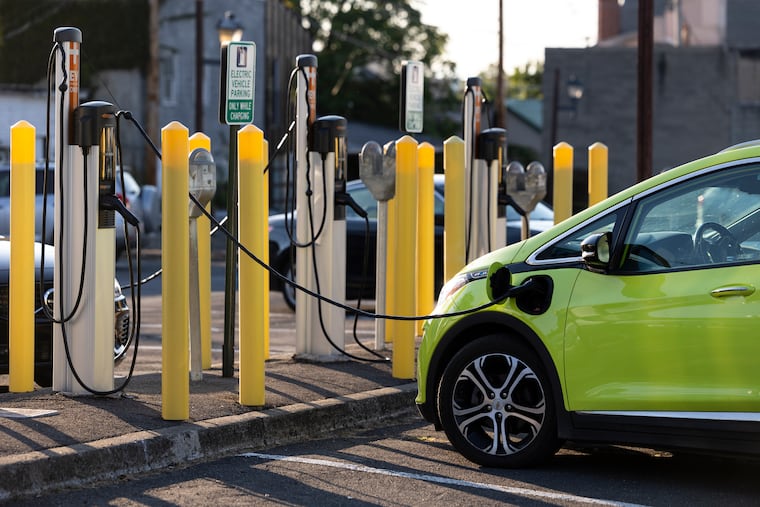
The Trump administration has announced plans to unfreeze funding allocated for electric vehicle (EV) charging infrastructure, aiming to restore billions of dollars that were initially made available under President Joe Biden. This move seeks to address the gaps in the national charging network, which continues to evolve even as the White House has retreated from its previous support for battery-powered vehicles.
In a ruling from June, a federal judge determined that governmental officials had overstepped their authority by halting this funding. This decision mirrored a congressional watchdog’s earlier finding that these officials lacked the legal right to withhold the financial resources. Following these legal developments, Transportation Secretary Sean P. Duffy indicated that the Department of Transportation intends to relaunch the program, albeit with a sense of reluctance, and will issue revised guidance to state agencies tasked with the installation of charging stations.
Duffy emphasized the need for efficiency in utilizing federal resources, stating that if Congress mandates federal support for charging infrastructure, the implementation should avoid wasteful expenditures. The reissued guidance notably strips away Biden-era provisions that emphasized labor standards as well as the inclusion of minority-owned contractors and investments in historically disadvantaged communities. Furthermore, this new directive offers states greater autonomy in deciding when their highway-based charging network is deemed complete, thereby allowing for a broader range of charging projects.
The original billion initiative, established under the 2021 infrastructure law, represented a significant federal investment aimed at enhancing charging capabilities amid Biden’s push for a transition to electric vehicles. However, the program has faced criticism for its slow rollout, having funded fewer than 400 charging ports so far. The Trump administration has targeted these environmental initiatives since taking office, pledging to undo various efforts in this sector.
As electric vehicle sales have stagnated and tax credits for buyers were cut off in late September, demand for EVs may experience a downturn. Nevertheless, EVs still constitute approximately 10% of new vehicle sales, highlighting the necessity for a comprehensive charging network. The auto industry has reported that vehicle sales continue to outpace the installation of new charging stations, underscoring an urgent need for expanded infrastructure.
Leading the charge, companies like Tesla, which currently operates the largest share of charging stations and has opened its network to other manufacturers, are aggressively expanding infrastructure. According to recent data, approximately 16,700 new high-speed charging ports are expected to become operational this year—an increase of 19% compared to last year.
Despite the thaw of federal funding, projections indicate that government resources would account for merely 2% to 3% of the newly opened charging ports this year. The funds play a crucial role in bridging gaps in the national charging landscape, ensuring that high-speed charging ports are readily available along major routes to facilitate long-distance travel.
In early February, the Trump administration had suspended the federal program, halting state-level installation efforts. However, recent contracts have shown potential signs of state governments preparing to utilize the previously allocated funds to deploy thousands of chargers. As legal challenges persist, state officials and advocacy groups alike remain vigilant, urging the transportation department to fully restore funding and expedite the rollout of charging infrastructure. The upcoming weeks will be critical as states prepare to resubmit their plans for funding deployment.
In summary, the prospect of renewed federal support for electric vehicle charging infrastructure signals a potential shift in momentum for the EV market, despite the myriad challenges linking policy shifts, demand fluctuations, and infrastructure needs. Enhanced coordination between federal and state agencies will be pivotal in ensuring that the burgeoning electric vehicle market is supported by adequate charging infrastructure moving forward.
Media News Source.