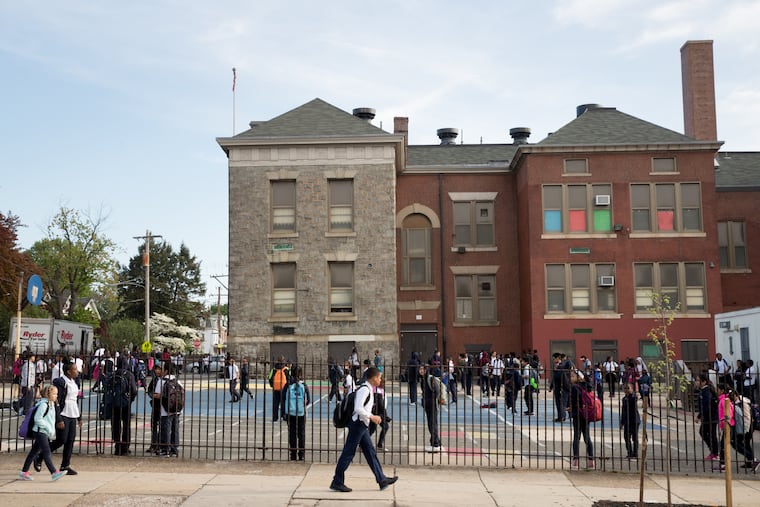
Philadelphia group warns against demolishing schools as city prepares for closures.
The Preservation Alliance for Greater Philadelphia is urging the Philadelphia School District to prioritize the preservation of historic school buildings as the district approaches an imminent deadline to determine the fate of over 200 educational facilities. With the district contemplating closures, the call to save historically significant structures comes amid a growing concern for proper maintenance and modernization rather than demolition.
Among the buildings at risk is Francis Scott Key Elementary, which has been in operation since 1889, making it the oldest school still functioning within the district. The average age of the district’s school buildings is around 75 years, and many are suffering from years of underfunding, deferred maintenance, and environmental hazards that contribute to their deteriorating conditions.
In a report released recently, the Preservation Alliance highlighted the critical juncture for the district to consider transforming, rather than dismantling, these historic structures. Over the past few years, the district has already demolished two schools recognized on the National Register of Historic Places, Cassidy Elementary and AMY at James Martin Middle School.
The district’s history dates back to 1818, growing into a network of 218 operational schools across approximately 300 buildings. However, this extensive inventory has been deemed in poor condition, with about half of its facilities in need of significant repairs according to district data. The issue is compounded by uneven enrollment, where certain areas experience overcrowding while others have approximately 70,000 vacant seats.
The report draws attention to the lack of policies prioritizing the adaptive reuse of historic buildings over their demolition. In light of rising costs associated with new construction, the Preservation Alliance advocates for protocols to “mothball” schools that may be decommissioned, allowing for future reuse rather than complete disposal.
Currently, there are around 100 schools within the district either operational or chartered that hold some form of historic designation. Notably, structures on the National Register afford opportunities for financial incentives yet do not guarantee protection from demolition. In contrast, buildings on the local register enjoy more extensive protections, thus cannot be demolished.
Economically, maintaining and renovating historic buildings has been shown to be more cost-effective than rebuilding. Recent analysis suggested that repairing a selection of schools could save the district an estimated million.
As discussions about potential school closures progress, community advocates express the need for these buildings to serve as community assets rather than being razed. Successful examples in the past have seen closed schools transformed into affordable housing units and community centers, demonstrating that historic buildings can retain their value to neighborhoods.
To conclude, with the district set to announce its recommendations for closures and renovations within the year, the importance of these historic schools continues to resonate as critical resources for community identity and continuity. The decisions made in this process will impact not just educational infrastructure, but the cultural legacy these buildings represent.