
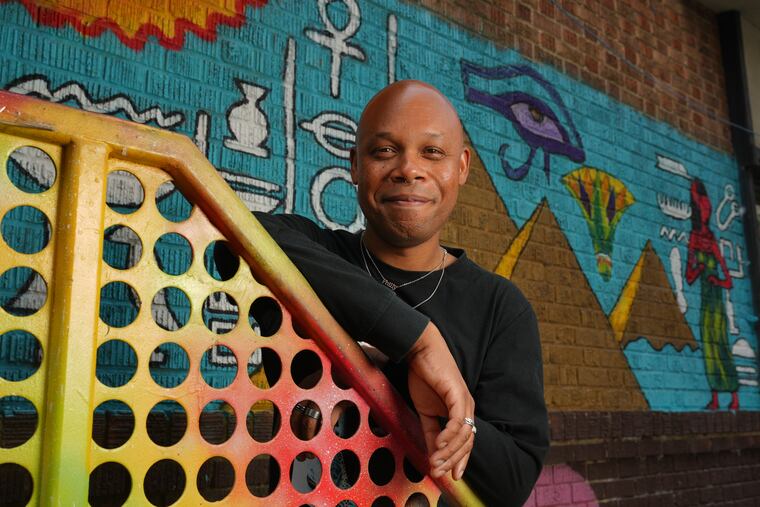
Local author highlights Philadelphia as the home of Black genius in new discussion.
In a thought-provoking exploration of the Black experience in America, Philadelphia-based writer Tre Johnson offers a compelling redefinition of Black genius in his recently released book, “Black Genius: Essays on American Legacy.” Contrary to the common narratives that often center around survival, Johnson argues that Black genius transcends mere survival, capturing the essence of thriving and ingenuity that emerges from marginalized communities.
Johnson posits that Black genius is manifested in various aspects of everyday life—be it the corner store, the neighborhood bar, or the rich cultural practices within Black communities. He emphasizes that Black genius is the ability to leverage perceived disadvantages into unique strengths, a theme that resonates throughout his essays. These reflections are not merely theoretical; they are rooted in personal experiences and cultural observations that showcase the deep resilience and creativity of Black Americans.
Throughout his work, Johnson critiques the restrictive notions of respectability politics and the so-called “white gaze,” suggesting that Black brilliance flourishes independently of external validation. He provides a kaleidoscopic view of Black life in Philadelphia, where cultural events like Odunde, the Roots Picnic, and the BlackStar Film Festival illustrate the vibrant community connections and celebrations of resilience that define the Black experience.
Johnson’s background informs his perspective. Growing up in Trenton, New Jersey, and later pursuing education at the University of Maryland, he later accepted a teaching position through Teach for America, which introduced him to the realities facing many Black students in public education. In his various roles, he sought to bridge the gap between Black communities and educational institutions that frequently failed to recognize the individuality and genius of Black students.
As he reflects upon the ingenuity of Black households—rather than focusing solely on prominent figures—Johnson’s work is both a personal testament and a social critique. His endeavors to understand and celebrate the myriad ways in which Black communities support each other in the face of systemic barriers contribute to a broader narrative about resilience and creative expression.
In the context of a cultural landscape that too often vilifies Black communities, “Black Genius” serves as a vital reminder of the power inherent in collective storytelling and shared experiences. It encourages a reimagining of what constitutes genius, elevating the everyday brilliance of individuals who navigate challenges with creativity and tenacity.
As Johnson embarks on a 15-city book tour, he continues to advocate for recognition of the communal aspects of genius, urging society to acknowledge and celebrate these narratives. This call to action remains pertinent, especially in times when Black history and contributions are often overlooked or marginalized. Through his writing, Johnson inspires a vision where communities uplift one another, fostering an environment where imagination and creativity can thrive—showcasing the true essence of Black genius.
Published by Dutton, an imprint of Penguin Random House, “Black Genius” reaffirms the significance of finding joy and beauty within the complexities of Black life, while also establishing a framework for understanding the cultural legacies that continue to shape today’s society. This celebration of Black genius is not only a personal journey but a collective movement towards recognizing the vast contributions of Black communities across America.


