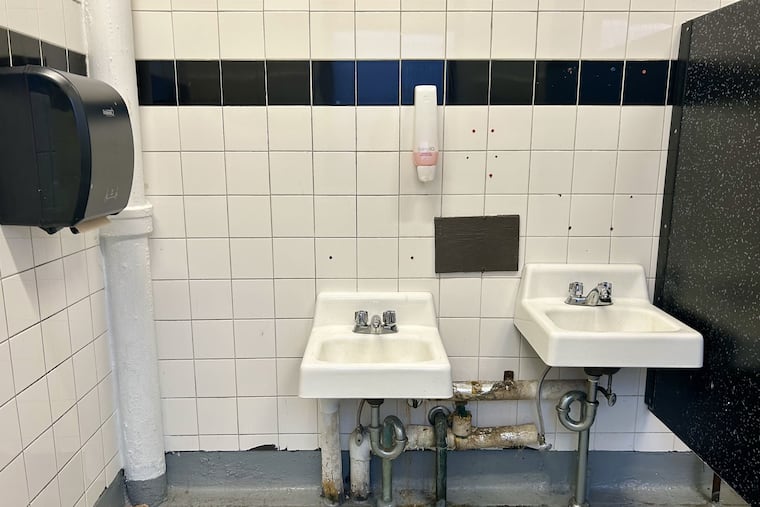
Many Philadelphia school bathrooms are frequently out of service, with repairs averaging over one month.
In recent years, the Philadelphia school district has made noticeable progress in addressing issues with bathroom repairs, although challenges remain. According to data presented during a recent school board meeting, the average repair time for broken school bathrooms has decreased from 50 days three years ago to 34 days in the 2024-25 school year. Despite this improvement, the current average still exceeds the national median repair time, which stands at 17 days for all districts and 27 days for larger urban districts, as reported by the Council for Great City Schools.
District officials acknowledge that timely bathroom repairs are crucial for student comfort and well-being. Reports indicate that longstanding issues such as broken stalls and toilets, as well as inadequacies in basic supplies like soap and toilet paper, influence how students feel about their educational environment. Tonya Wolford, the district’s Chief of Evaluation, Research, and Accountability, emphasized the importance of addressing these concerns.
A significant factor contributing to the delays in bathroom repairs is the shortage of available plumbers. The district is authorized to employ 21 plumbers, but currently, only nine are on staff. While the district contracts with external companies to address some of the workload, it still faces a backlog of thousands of open work orders. Wolford noted that adequate staffing and funding are essential for completing work orders promptly.
In the 2022-23 school year, the district successfully closed 91% of bathroom repair requests within the fiscal year, a notable increase from 76% in the 2019-20 school year. Oz Hill, the Deputy Superintendent of Operations, pointed out that although the volume of repair requests has increased in recent years, the district is closing a greater percentage of them and doing so more efficiently.
To further enhance the repair process, the district has prioritized bathroom work orders over other requests and established a task force dedicated to streamlining and improving repair timelines. Furthermore, the district has made strides in implementing hydration stations—water bottle filling stations that have replaced traditional water fountains. In compliance with city requirements, the school district needed to install one hydration station for every 100 students by June 2025, culminating in a target of 1,180 stations. The district has surpassed this goal, with 2,447 such stations currently in operation.
As the school district continues to confront facilities-related challenges, the focus on expedited bathroom repairs and enhanced hydration accessibility highlights ongoing efforts to improve the learning environment for its students. Media News Source.