Residents near North Wildwood express concern over potential flooding threats to their homes in Grassy Sound.
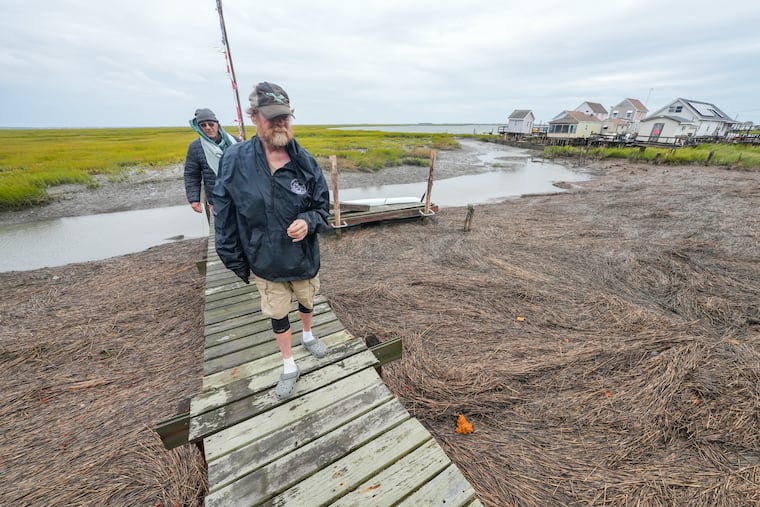
Haldy Gifford, a 78-year-old resident of Grassy Sound, is concerned for the future of his home, which sits at the periphery of a vulnerable marshland along the Intracoastal Waterway in Middle Township, Cape May County. Gifford’s residence, during the summer months, offers picturesque views of sunsets just a short distance from the Atlantic Ocean. However, he expresses deep anxiety over the increasing erosion threatening the stability of his property.
Ten years ago, Gifford witnessed the dramatic loss of a neighboring house, which was uprooted by a severe nor’easter and swept away into the channel. His observation of this event has been a constant reminder of the growing risks posed by changing environmental conditions. The recent severe storms have intensified his fears, prompting him to openly declare the potential for his home to be washed away without significant intervention from state or federal agencies.
Residents of Grassy Sound, including Gifford and fellow homeowners, are vocal about their concerns surrounding the accelerating erosion of the marshlands that have historically been subject to the erosive forces of wind and water. This locale’s historical roots date back to the 17th century when it served as a hub for whaling and fishing. Over the years, a small village was established, characterized by a unique boardwalk that connects its charming cottages, allowing residents to transport supplies from distant parking areas.
The impact of natural disasters, notably the 1962 Nor’easter and Hurricane Sandy in 2012, has further aggravated the ongoing erosion problem. Although scientists attribute the deterioration of New Jersey’s marshlands to rising sea levels, some local residents remain skeptical, believing that additional human-related factors contribute to the rapid decline. Among these factors is the phenomenon of wracks—large accumulations of decaying marsh grass that can smother remaining vegetation and hasten erosion.
Gifford notes a worrying shift in the landscape, claiming that the depth of water near his home has increased significantly, indicative of the marsh disappearing before his eyes. Despite efforts to mitigate these wrack formations, such as removing them by hand, residents feel overwhelmed by the scale of the issue and seek assistance from the New Jersey Department of Environmental Protection (DEP) and the U.S. Army Corps of Engineers.
The DEP acknowledges that the issues affecting Grassy Sound are part of a larger trend of wetland loss throughout New Jersey, where rising sea levels pose a significant threat. Currently, the agency does not have specific programs dedicated to Grassy Sound, as it lies outside designated state-managed land. However, the department has made efforts in the surrounding areas using clean dredged materials to bolster vulnerable tracts of land.
As awareness of these challenges grows, residents continue to advocate for comprehensive solutions to preserve their unique community and its delicate ecosystem. The ongoing battle against marshland erosion at Grassy Sound encapsulates a broader existential struggle faced by coastal communities as they confront the realities of climate change and environmental degradation.