Economic uncertainty and tariffs lead retailers to adopt a cautious approach to holiday hiring.
As the holiday season approaches, retailers are grappling with economic uncertainty and escalating tariffs, leading many to reconsider their seasonal hiring strategies. This trend is particularly evident in sectors that typically rely on temporary workers to manage the increased demand during the most critical retail period of the year.
American Christmas LLC, known for its extravagant holiday installations at renowned locations such as Rockefeller Center and Radio City Music Hall, has announced plans to hire 220 temporary employees—significantly down from the 300 it recruited last year. The late start to its hiring campaign, nearly two months behind schedule, is largely attributed to rising tariff costs anticipated to reach as much as .5 million this year, doubling last year’s figure of 0,000.
Challenger, Gray & Christmas, a job placement firm, predicts overall holiday hiring will likely fall below 500,000 positions, which represents a decrease from last year’s 543,000 and the smallest seasonal gain in 16 years. The average seasonal increase in hiring since 2005 stands at 653,363 workers. Other firms echo this caution; for example, Radial, an e-commerce company, plans to bring on 6,500 temporary workers, marking a reduction from the 7,000 hired last year.
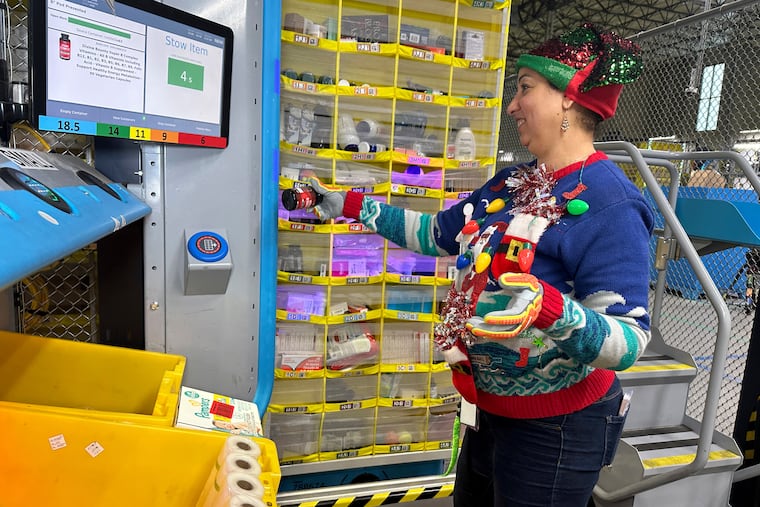
In contrast, Amazon Inc. remains a notable exception in this landscape, announcing it will maintain its seasonal hiring target at 250,000 workers, consistent with previous years. While some retailers indicate hesitation in revealing their hiring figures, as seen with notable companies like Target Corp. and Macy’s, they face challenges amid a weakening job market and greater pressures from economic fluctuations.
Analysts are keenly observing these developments as they could yield insights into consumer spending during the holiday season. Consequently, many retailers are adjusting their hiring timelines, opting for more flexible strategies that permit them to respond quickly to real-time demand. This shift entails hiring closer to major shopping events and utilizing technology to facilitate quicker training processes for new employees.
With the U.S. job market losing some momentum earlier this year, with only 22,000 jobs added in August compared to economist expectations of around 80,000, the implications of this hiring landscape could have long-lasting effects. Retailers are poised to navigate a spending environment influenced by increased costs due to tariffs, combined with uncertainty stemming from a government shutdown that has temporarily halted the release of critical economic data. As they adapt their strategies, these companies are bracing for what is anticipated to be a modest growth season in holiday sales, projecting increases that fall below last year’s robust numbers.
As preparations evolve, the agility of companies in responding to these market conditions will likely determine their success in meeting consumer demand this holiday season. Media News Source.