SNAP recipients urge Trump administration to restore food benefits as clergy members participate in a fasting event in solidarity.
As the federal government shutdown continues, food assistance programs are facing significant disruptions, affecting millions of Americans, including many in Pennsylvania. Last week, Jacqueline Chapman, a 65-year-old resident of West Philadelphia, found herself among numerous Pennsylvanians who received their monthly Supplemental Nutrition Assistance Program (SNAP) benefits late. This delay came amidst the Trump administration’s controversial efforts to freeze funding for food assistance programs, which has now entered the courtroom.
Chapman received 8 for the month, a figure that was already delayed beyond its typical distribution schedule. Desperate to secure her nutritional needs, she rushed to the grocery store, purchasing enough ingredients to last for months, including items for spaghetti, chicken dishes, and chickpea pasta. The current climate of uncertainty surrounding federal assistance programs compelled Chapman to stock up in anticipation of future complications that could jeopardize her access to vital food support.
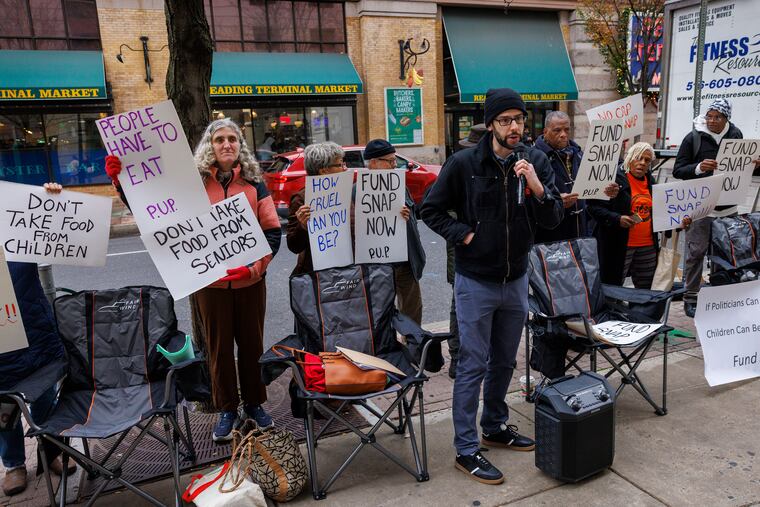
The discontent surrounding the disruption of food assistance was palpable during a rally held outside Reading Terminal Market in Philadelphia. Organized by the Philadelphia Unemployment Project, the gathering was attended by SNAP recipients, clergy, and advocates, all united in their demand for the federal government to restore full funding to food assistance programs. Among the participants was Adam Goldman, the executive director of the Philadelphia Unemployment Project, who characterized the situation as one of “cruelty,” highlighting the severity of withholding assistance from families in need.
The Trump administration’s freeze on SNAP funding, implemented at the end of October, has put critical support in jeopardy for approximately 42 million Americans, including nearly 2 million residents in Pennsylvania. Just before the pause in payments, Pennsylvania managed to distribute benefits to around 190,000 households. A federal judge in Rhode Island had recently mandated that the administration must pay November benefits in full; however, ongoing legal battles have complicated the execution of these orders, culminating in an extension to block full SNAP payments until a decision is made.
The implications of the funding freeze are particularly troubling for vulnerable populations, including families who rely on SNAP support during the holiday season. Members of the House of Representatives may soon vote on a Senate bill aimed at reopening the government, though current legislative proposals do not include critical extensions for Affordable Care Act tax credits.
As SNAP recipients and advocates continue to voice their concerns, the urgency to restore food assistance funding remains higher than ever. Participants in the Reading Terminal Market rally chanted slogans like “Fund SNAP now!” as they highlighted the dire consequences the funding cuts could inflict on those who rely on this essential aid. The need to address these systemic issues and support the most vulnerable populations in society is more pressing than ever as the nation continues to grapple with the complexities of government funding and its real-world implications.
With the potential for looming hunger and financial insecurity, the anxieties felt by SNAP recipients like Dwayne Carson, a 62-year-old Air Force veteran relying on both food assistance and Affordable Care Act support, reflect a broader fight for health security and social safety nets in America.