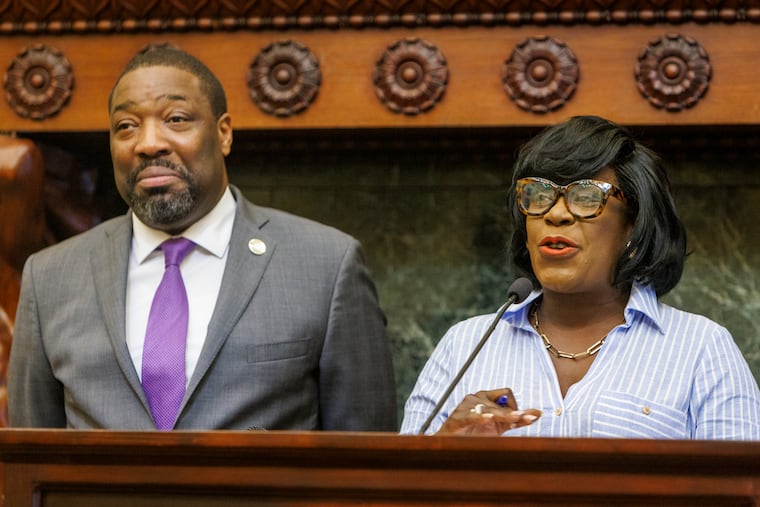
Philadelphia Council President states Mayor Parker strategically abandoned diversity contracting goals.
The recent decision by Philadelphia Mayor Cherelle L. Parker to eliminate certain diversity benchmarks in the city’s contracting practices has sparked debates among local lawmakers and stakeholders. City Council President Kenyatta Johnson publicly backed Parker, asserting that her administration’s choices reflect a strategic approach amidst potential legal challenges. Johnson remarked that the mayor is navigating a complex landscape, ensuring compliance with prevailing legal standards to avoid litigation.
The city’s administration has officially ceased its longstanding objective of designating 35% of municipal contracting dollars to businesses owned by women and people of color. Additionally, the city, as of September, has discontinued the practice of setting specific targets for contractors regarding subcontracting portions of their work to minority-owned enterprises. These measures are part of a broader shift designed to make procurement policies gender- and race-neutral, in light of recent judicial rulings, including the Supreme Court’s 2023 decision declaring affirmative action in college admissions unconstitutional.
The impetus for this strategic pivot appears rooted in a rising national backlash against diversity, equity, and inclusion (DEI) initiatives. President Donald Trump has openly threatened to revoke federal funding from jurisdictions whose DEI programs he deems illegal, placing additional pressure on local governments to reassess their equity frameworks.
Johnson, who has historically championed the cause of diverse businesses within Philadelphia, emphasized that while he supports Parker’s decisions, he will continue to advocate for equitable contract opportunities within his district in South Philadelphia. He noted the importance of ensuring that Black, brown, and women-owned businesses have access to city contracts requiring municipal approval. This dual approach of supporting small and local businesses while striving for inclusivity in contracting reflects the ongoing complexities faced by city leadership.
Conversely, Councilmember Cindy Bass expressed her strong discontent regarding the changes, calling for clarity from the administration about how these decisions will affect local economies and employment rates in underserved communities. Bass is particularly concerned about the implications of reallocating funds and the potential exclusion of marginalized groups from economic opportunities.
Further dissent emerged from Councilmember Kendra Brooks, who criticized Parker’s stance, interpreting the decision as a capitulation to Trump-era policies. She articulated the sentiments of constituents who desire visible leadership that actively fights for their interests. In response to Brooks’ comments, Johnson defended the mayor, asserting her commitment to pragmatic public policy that supports small businesses in Philadelphia.
The ongoing discourse surrounding these policy changes underscores the delicate balance Philadelphia’s leadership must maintain in light of evolving legal and political landscapes. As future contracts are negotiated and awarded, the implications of Parker’s decisions will likely remain a central topic of debate among the city’s elected officials and citizens alike.
Media News Source