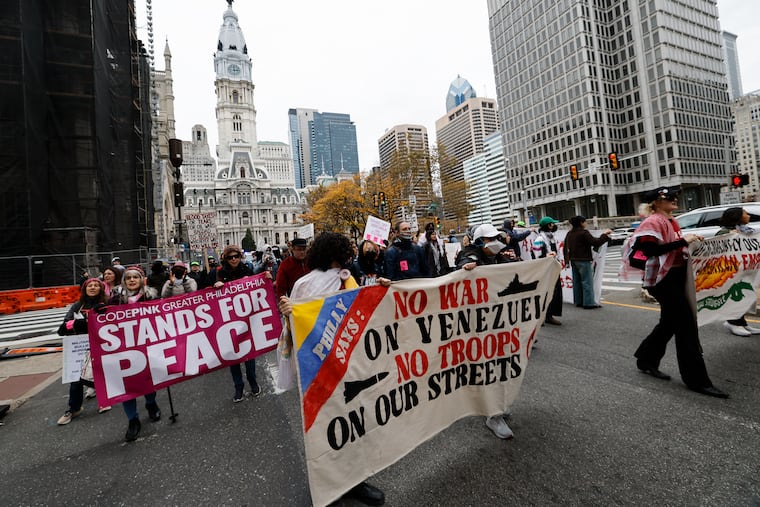
Protesters in Philadelphia demand an end to U.S. military actions against alleged drug-smuggling boats in Venezuela.
On a recent Saturday afternoon, over 60 individuals convened on the north side of Philadelphia City Hall, embarking on a march that aimed to challenge what they perceive as the United States’ aggressive military actions against Venezuela. The demonstration, organized under the banner “Hands off Venezuela,” was situated in the broader context of U.S. operations in the Caribbean aimed at targeting suspected drug-trafficking vessels, classified as “Operation Southern Spear” by Secretary of Defense Pete Hegseth.
The protesters vocally expressed their support for Venezuela, chanting phrases such as “Viva, viva Venezuela. U.S. out of Venezuela,” and denouncing U.S. military interference. As tensions escalate, the U.S. Southern Command has reported that more than 21 vessels have been engaged by U.S. forces since the operation’s commencement, resulting in at least 80 fatalities. This includes a recent attack on a vessel in international waters, which allegedly involved narcotics trafficking.
Many participants in the Philadelphia rally called for a diplomatic resolution and urged respect for Venezuela’s sovereignty. Local peace organizations, including CodePink Greater Philadelphia, reinforced their opposition to the U.S. government’s interventionist policies. The marchers carried signs with messages such as “No war on Venezuela,” and advocated for an end to military actions in the region. They expressed sentiments that military aggression does not lead to peace but rather exacerbates the conflicts.
Amid the protest, Venezuelan President Nicolás Maduro addressed an international audience, urging U.S. citizens to voice their opposition to military interventions in South America and the Caribbean. His comments reflect ongoing tensions as the U.S. has accused Maduro of being involved in drug trafficking, with the Justice Department offering a reward for information leading to his arrest since 2020.
Numerous protest attendees articulated personal connections to Venezuela, sharing stories of family members affected by U.S. sanctions, which they argue have hampered access to essential goods. Many expressed fears that military action would escalate tensions further and called the strikes a means of intimidation.
The march concluded peacefully but with a determination among participants to mobilize again if necessary, underscoring their commitment to advocate against what they characterize as unjust military aggression and to support the self-determination of the Venezuelan people. As geopolitical dynamics continue to evolve, the discourse surrounding U.S. intervention in Venezuela remains a focal point of contention both domestically and internationally.