Charity provides free MRIs for brain cancer screening, but doctors express concerns about potential risks involved.
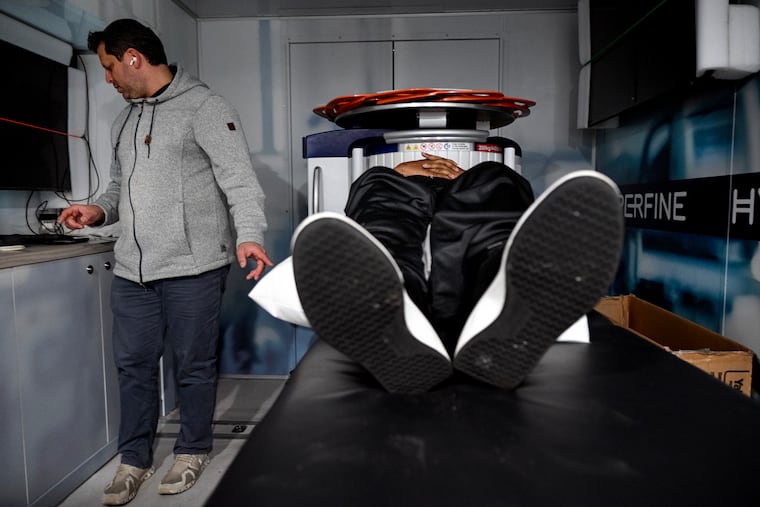
In Philadelphia, Sherri Horsey Darden, who does not exhibit any symptoms commonly associated with brain tumors, recently sought an MRI as part of a screening program offered by the Brain Tumor Foundation, a New York-based charity. Despite having no family history of brain cancer and no observed health issues, Darden opted for the precautionary scan at Triumph Baptist Church in North Philadelphia, reflecting a growing trend toward proactive health monitoring among the public. The foundation has dedicated over a decade to providing these free MRI screenings, aimed at encouraging early detection of brain tumors.
The increasing popularity of MRI scans for preventive health has been fueled in part by endorsements from high-profile figures, including celebrities advocating for costly whole-body scans on social media platforms. However, medical experts caution against the indiscriminate use of such screenings. Concerns relate to the potential for unnecessary procedures, heightened anxiety among patients, and the reality that early detection does not always translate into improved outcomes. Most insurance plans do not cover MRIs unless they are ordered by a physician, with costs for scans ranging between ,000 and ,000.
Stephen Bagley, a neuro-oncologist with Penn Medicine, emphasizes that current data does not support the efficacy of routine screening MRIs for brain tumors, pointing out the limitations of early diagnosis in an inherently aggressive disease like glioblastoma. This particular type of brain tumor is classified as a grade four malignancy and is characterized by rapid growth, making the time between its development and when symptoms arise typically short.
The complexities surrounding screening guidelines for brain cancer are further echoed by Richard Wender, a prominent figure in cancer care from Penn Medicine. He articulates that effective screening must adopt rigorous criteria, including disease prevalence, risks associated with the disease, and the existence of effective therapeutic interventions. Consequently, brain cancer screening currently does not meet these thresholds.
Despite skepticism from health professionals, the Brain Tumor Foundation continues to conduct its screening events, with hundreds of participants engaging in the program in various cities. For instance, in Philadelphia, the foundation aimed to scan between 100 and 150 individuals.
The organization has initiated a formal research study in partnership with Weill Cornell Medicine and NewYork-Presbyterian to explore the potential benefits of MRI screenings in the general population. This ambitious study, which seeks to involve thousands of patients, ultimately intends to clarify whether such screenings could yield meaningful health outcomes.
In contexts where direct family histories of brain cancer exist, individuals like Alexandra Schreiber Ferman are more likely to seek these screenings. Schreiber Ferman’s family has long been involved with the Brain Tumor Foundation, advocating for routine access to MRI scans similar to standard cancer screenings such as mammograms.
While the foundation holds a vision for the integration of routine brain scans into preventive health measures, medical experts continue to stress the importance of evaluating the risks versus benefits associated with such practices. The landscape of brain cancer screening remains complex, requiring ongoing research and a patient-centric approach that prioritizes evidence-based care.