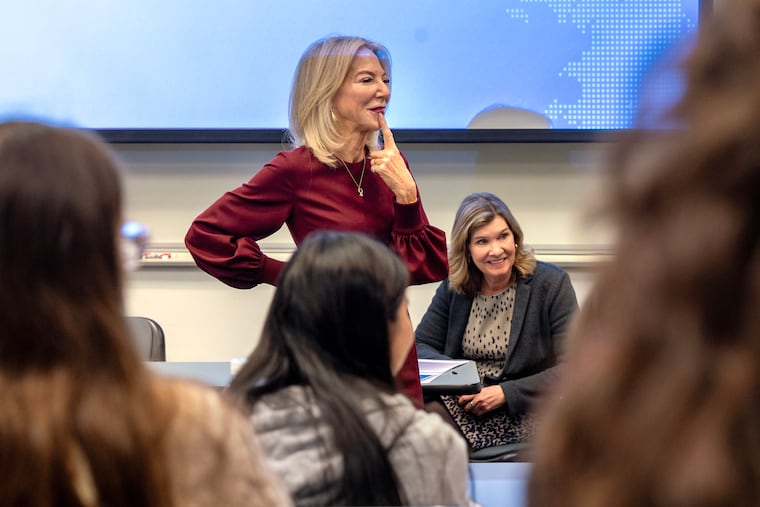
Former Penn president Amy Gutmann returns to teaching; students share their experiences in her classroom.
At the University of Pennsylvania, a recent undergraduate class has ignited a spirited examination of affirmative action in college admissions. Divided into two groups, students passionately engaged in debate, tasked with advising a fictional governor of a swing state, who had yet to provide a clear stance on this contentious issue. Their discussions were undoubtedly influenced by the landmark U.S. Supreme Court ruling in 2023 which effectively dismantled the legal basis for race-conscious admissions policies.
The class, held under the guidance of Amy Gutmann, a prominent figure in academia and former university president, involved students grappling with complex questions surrounding equality in educational access. Gutmann, who has an extensive leadership background and served as the U.S. ambassador to Germany, asserted a unique authority in facilitating this dialogue. She emphasized the importance of understanding opposing viewpoints, asserting that true comprehension of one’s beliefs necessitates an awareness of those held by others.
This semester marks Gutmann’s return to the classroom after a lengthy tenure in administrative roles, and she is co-teaching with Sarah Banet-Weiser, dean of the Annenberg School for Communication. The course, titled “The Art and Ethics of Communication in Times of Crisis,” aims to foster a learning environment conducive to open and respectful discussions of provocative subjects, particularly relevant in today’s polarized political climate.
The absence of electronic devices in the classroom encourages deep engagement in the discussions. Students are prompted to explore thought-provoking questions such as the implications of affirmative action across different demographic groups and whether equality of treatment equates to equitable outcomes. This method has resonated well with students, many of whom expressed a desire for a learning experience that challenges their existing perceptions and encourages personal growth.
Gutmann, at 75, reflects on the profound meaning of returning to teaching, viewing the opportunity as a chance to connect with the core objectives of higher education—facilitating dialogue and critical thought. As debates on the future of college admissions continue to evolve, Gutmann’s instructional approach may serve as a model for instilling the values of understanding and respect in the next generation of leaders.
As students navigate these discussions, common ground emerges, with unanimous support for the idea that diversity enriches the educational experience. However, significant disagreement persists regarding the mechanisms for achieving such diversity. This ongoing discussion ultimately underscores the necessity for educational institutions to confront their policies and practices in the face of legal and societal change, paving the way for a more inclusive future.
The class has created a unique atmosphere where students can process complex societal issues critically, preparing them not only for the academic realm but also for their future roles as informed citizens. The insights gleaned from these dialogues could enrich the broader discourse on education and diversity in America. For many students, participating in Gutmann’s class has proven to be an unparalleled opportunity for intellectual engagement and personal development amid our nation’s ongoing debates over equity and access in higher education.
Media News Source