
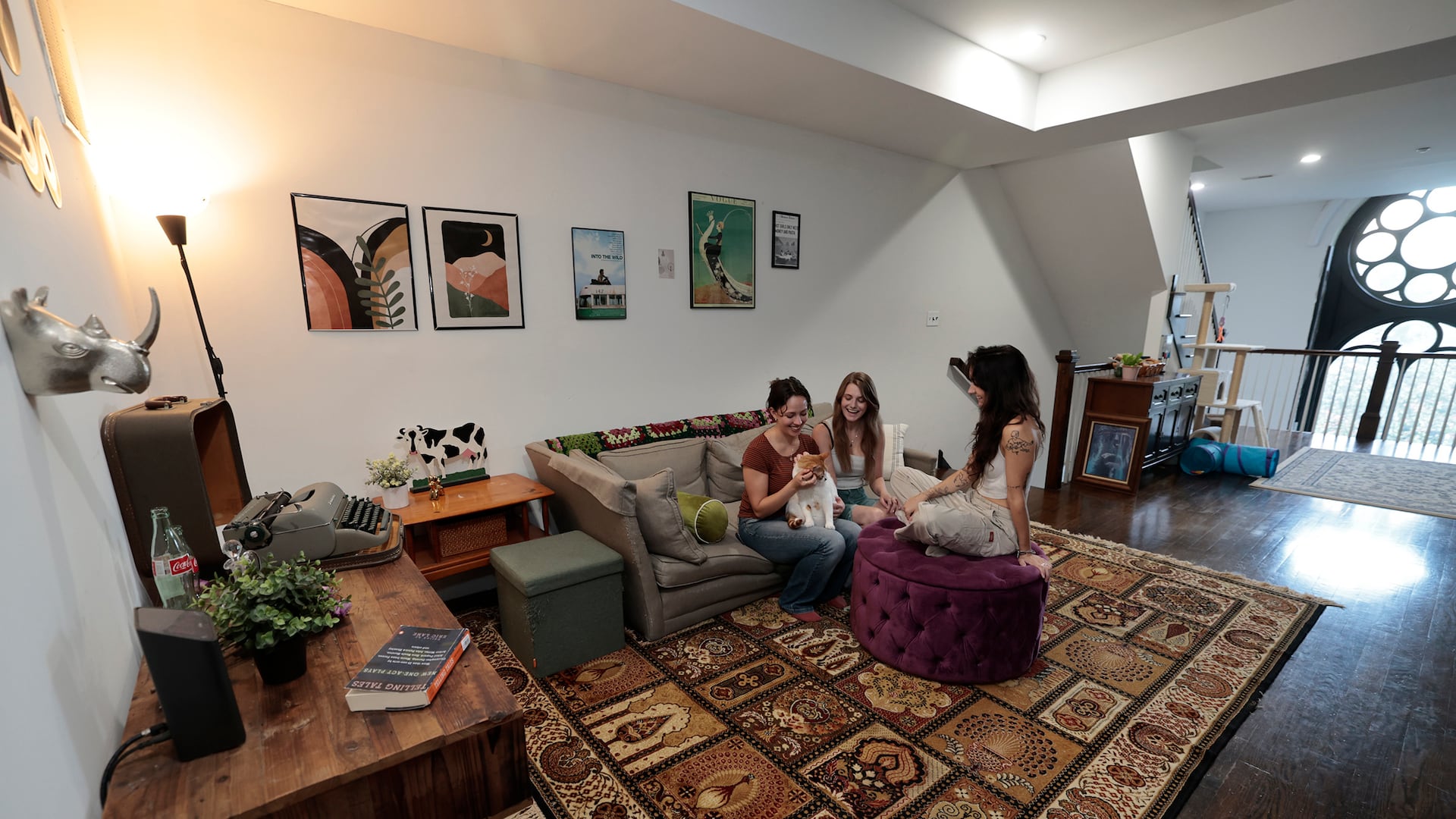
Four Roommates Create New Living Space in Converted Church Apartment
In the Spring Garden neighborhood of Philadelphia, a unique living arrangement is gaining attention. Four young women—Corwynne Peterson, Riley Sperger, Ashlee Propst, and Magdalena Becker—have transformed what was once the Christ Reformed Church into a vibrant shared home. This Romanesque-style brownstone, constructed in 1860, has been cleverly repurposed into 17 multi-level rental units, effectively merging historic architecture with contemporary living.
The church’s congregation has diminished over the years, leading to its eventual decline. After serving as a recreation center for some time, the building was acquired by the Regis Group in 2003, which undertook its conversion while preserving many notable architectural features. The transformation maintained soaring ceilings, intricate plaster moldings, and several leaded glass windows, marrying the old with the new. The eclectic decor—featuring elements like whitewashed brick and exposed beams—adds character, with remnants of the church’s past still visible, including patterned wallpaper near communal spaces.
Every Halloween, the roommates host themed parties, drawing more than 80 guests to their residence. Last year, curious attendees arrived dressed in costumes reminiscent of their current and past surroundings, such as a nun and Jesus, reflecting the building’s religious history. The sanctuary serves as a venue for festive gatherings, where the iconic animated film “It’s the Great Pumpkin, Charlie Brown” is screened on the dome that once housed congregational worship.
Each of the women has personalized living spaces while contributing to a shared aesthetic throughout the home. Decor is sourced from local second-hand shops and online marketplaces, emphasizing a collaborative spirit in furnishing their shared abode. Personal artifacts—a vintage typewriter and artistic memorabilia—add a layer of intimacy to the environment.
While communal cooking is minimal, the women enjoy hosting events, bridging their individual lifestyles with collaborative festivities, from Halloween parties to milestone celebrations for birthdays and holidays. A shared affection for Peterson’s orange and white cat, Hugo, adds a further dimension to their household dynamics.
As these young women navigate adulthood in an innovative setting, their home in the former church stands as a testament to adaptive reuse in urban living, blending social connection, personal expression, and historical preservation within a unique architectural space.
This remarkable coexistence highlights not only the appeal of repurposed properties but also the vibrant human experiences that can flourish in such environments, making it a noteworthy case in contemporary urban living.


