Philadelphia debates the merits of vacant lots versus deteriorating buildings in discussions about urban development and preservation.
Mayor Cherelle L. Parker recently initiated discussions regarding the future development of Market East, Philadelphia’s urban corridor, during a press conference attended by influential developers and business leaders. This dialogue comes in the wake of a collaboration between Comcast and the Philadelphia 76ers, which intends to demolish structures on the 1000 block of Market Street. However, the future plans for the newly vacant land remain undisclosed.
While a Comcast executive emphasized ambitions to accelerate development in the area, dissent from historic preservation advocates persisted. Protestors at the event, holding signs with phrases such as “No More Holes On Market Street,” voiced their concerns regarding the lack of a concrete plan to replace the structures that will be demolished. This highlights a broader tension in Philadelphia, where approximately 70% of the city’s buildings predate 1960, yet only around 4.4% are shielded from demolition by the Historical Commission.
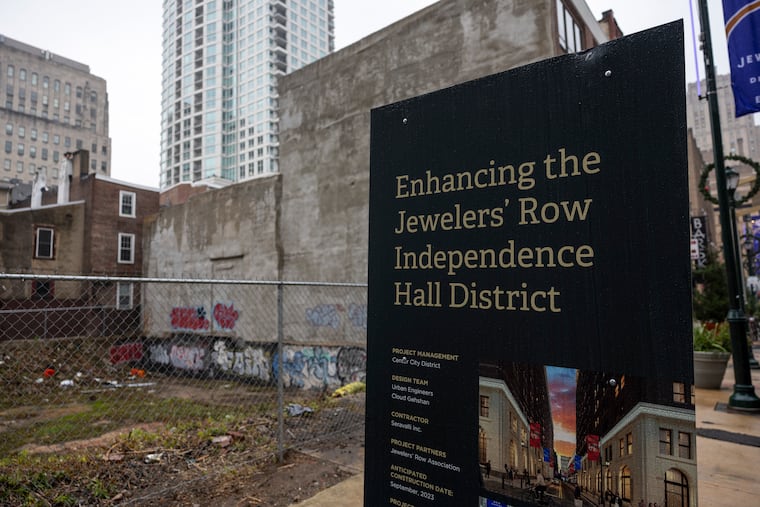
Preservationists have advocated for more stringent protections against the destruction of historic buildings. They cite ongoing frustrations with developers who leave vacant lots in their wake when projects stall, referencing past instances such as the development issues on Jewelers Row. In response to these concerns, two bills are currently moving through City Council that would mandate property owners obtain a building permit for new construction prior to demolishing existing structures.
Councilmember Jeffery “Jay” Young, who represents parts of North Philadelphia and Center City, contends that these regulations are designed to mitigate the adverse effects of speculative demolitions, which often leave communities with abandoned lots and halted progress. His proposed legislation aims to ensure responsible property development alongside community stability.
Similarly, Councilmember Jamie Gauthier has proposed measures for University City that would extend oversight of demolitions in conjunction with a broader suite of land-use regulations. While the legislative efforts underscore a push for responsible development practices, they have drawn criticism from the real estate sector, which argues that such regulations could hinder essential housing developments at a time of economic uncertainty, where increased interest rates and material costs pose significant challenges.
The Building Industry Association (BIA) has voiced its opposition, arguing that the proposed legislation could exacerbate the difficulties faced by the housing market in Philadelphia. BIA President Sarina Rose stated that implementing new barriers for development is particularly ill-timed, especially given the ongoing housing crisis.
Meanwhile, another bill introduced by Councilmember Mark Squilla seeks to weaken the protections for buildings identified for the Philadelphia Register of Historic Places, further complicating the preservation dialogue. As intense debates over demolition policies unfold, the preservation community warns of potential negative implications for Philadelphia’s architectural heritage.
The backdrop for these discussions includes a historic parallel of municipal decisions heavily influencing development patterns. Many demolitions in the latter half of the 20th century were enacted by the city, often targeting economically depressed neighborhoods. However, as development surged in recent years, driven by low interest rates and an influx of new residents, private-sector demolitions began to exceed municipal efforts.
As preservationists advocate for more comprehensive citywide policies rather than localized regulations, they underscore the importance of aligning Philadelphia’s demolition practices with successful frameworks in other municipalities. The ongoing efforts in City Council reflect a crucial juncture for the city, balancing the preservation of its historical identity against the demand for modern development.
The implications of these legislative actions on Philadelphia’s architectural landscape and community dynamics remain to be seen, as the dialogue between preservation and development intensifies. The outcomes will undoubtedly shape the future of urban planning and community identity in Philadelphia.
Media News Source.