Faith communities hold 40 weeks of prayer and protest outside ICE office.
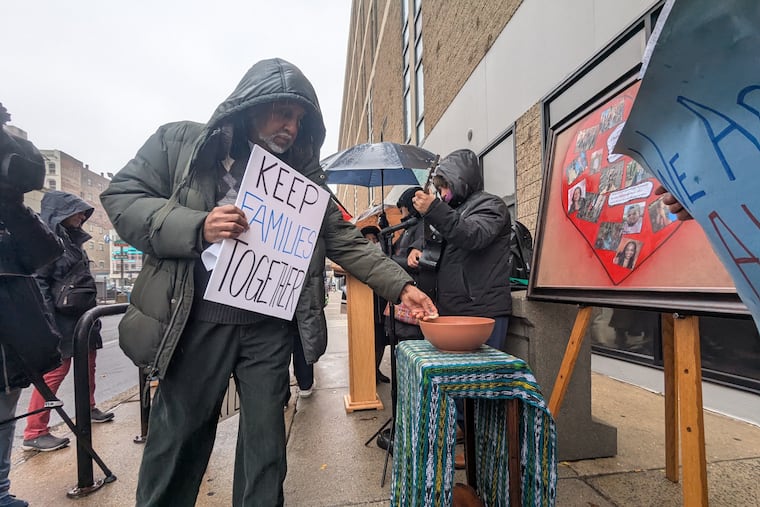
On a rainy Wednesday prior to Thanksgiving, congregants from the Roman Catholic parishes of Holy Innocents and St. Joan of Arc assembled outside the U.S. Immigration and Customs Enforcement (ICE) office located in Center City, Philadelphia. Their gathering was intended as a peaceful vigil, a demonstration of compassion and God’s core requirements for humanity as articulated by Rev. Christopher Neilson, an influential figure representing Christianity for Living Ministries and the pastor of the Living Church in Philadelphia. Participants were called to embody the principles of acting justly, loving mercy, and walking humbly with God.
The vigil was part of a broader movement advocating against the government’s stringent immigration policies. Notably, another interfaith gathering was planned at the ICE office on the eve of Thanksgiving, led once again by Neilson and his organization. This initiative, named ICE Profest 40, is a commitment to a series of weekly demonstrations aimed at highlighting concerns over the administration’s treatment of immigrants. The term “profest,” coined by Neilson, represents an expression of faith through proclamation, prayer, and protest.
The initiative is set to involve a diverse array of religious organizations, including Mennonite Action, several United Methodist churches, various synagogues, and the Sisters of St. Joseph of Philadelphia. Members from these congregations aim to participate in an ecumenical demonstration, spanning 40 weeks to signify a period of transition and transformation—akin to significant biblical events, such as Jesus’ 40 days in the wilderness.
While smaller gatherings might struggle to capture the attention often granted to larger protests, organizers believe the strength of their spiritual convictions will resonate powerfully. The biblical foundation for this movement underlines that faith can drive meaningful engagement, particularly in a political climate that many perceive as increasingly hostile towards immigrant communities.
In November, the United States Conference of Catholic Bishops voiced their opposition to the blanket deportation policies, aligning with sentiments expressed by Pope Leo XIV. This development signifies a shift within the Catholic community regarding the ongoing immigration crisis, especially among those who previously supported the administration’s stringent measures.
As religious leaders and communities reflect on the themes of hope and transformation during the Advent season, questions arise about the responsibility of faith communities in addressing these pressing issues. The ongoing ICE Profest 40 initiative serves as a reminder of the moral obligations to welcome and protect the stranger, echoing core tenets of Christian belief that demand justice and compassion in times of adversity.
Faith-based organizing, according to leaders involved, is crucial at a moment when the integrity of democracy and humanitarian values confront grave challenges. The journey towards transformation begins with small, deliberate actions grounded in faith, ultimately contributing to a larger narrative of social justice and advocacy for the voiceless.
Media News Source