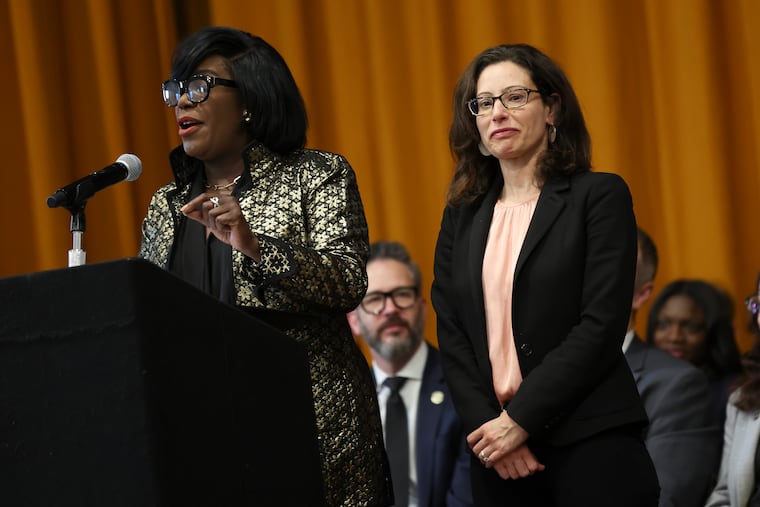
Philadelphia Mayor Cherelle L. Parker ends racial diversity goals in contracting, as revealed by internal documents.
Amid shifting national sentiments regarding affirmative action, Mayor Cherelle L. Parker’s administration has announced the conclusion of a Philadelphia policy that prioritized city contracts for women-owned and minority-owned businesses. This decision, attributed to recent judicial rulings that have posed challenges to similar government programs, followed guidance from a renowned law firm, Hecker Fink.
The administration’s consultation with legal experts stemmed from significant changes in the legal landscape after the U.S. Supreme Court’s ruling in 2023, which restricted the use of race-conscious policies in government operations, including hiring and contracting. City Solicitor Renee Garcia expressed confidence in the qualifications of her legal advisors, pointing to their extensive experience, including clerkships for Supreme Court justices. The firm suggested transitioning to a system that emphasizes support for “socially and economically disadvantaged” businesses, a proposal that prompted extensive deliberation within the administration.
However, internal documents reveal that Parker’s administration did not fully embrace the firm’s recommendations. Instead, the new policy introduced by Parker primarily favors “small and local” businesses, a choice viewed as a retreat from the more targeted efforts to address historical inequalities through a race-neutral lens. While officials assert that numerous small businesses owned by people of color will benefit from this program, critics argue that the shift undermines the original intent of fostering equity within city contracting.
The decision to alter the contracting framework drew scrutiny from various stakeholders who contend that it reflects a broader trend of capitulating to legal pressures rather than striving to uphold commitments to diversify business opportunities within Philadelphia. Critics emphasize that the transition away from race-conscious contracting risks sidelining those most affected by historical discrimination.
Parker defended the modifications by asserting that the new “small and local” initiative can yield equitable outcomes. The administration highlighted the necessity of adapting to the changing legal environment, with Parker explaining that the previous system was ineffective in promoting the participation of women and minority-owned businesses, noting that only a fraction of eligible firms had secured city contracts.
The recent shift in policy raises questions about the future of diversity, equity, and inclusion initiatives within Philadelphia, particularly as the administration navigates a legal context increasingly hostile to affirmative action. Experts suggest that the efficacy of the new approach will depend on its execution and whether it can genuinely support those businesses long underserved in the marketplace.
As the debate continues, observers remain cautious, acknowledging that while the “small and local” program aims to support a broad range of Philadelphia’s businesses, the lack of explicit indicators for social disadvantage raises concerns about inadvertently neglecting historically marginalized groups. The administration’s commitment to monitoring and adapting its strategies will be critical as stakeholders await the real-world outcomes of this significant policy shift.
The mayor’s approach has become a focal point in a larger national conversation, reflecting the complexities of promoting equity amidst evolving legal frameworks.