
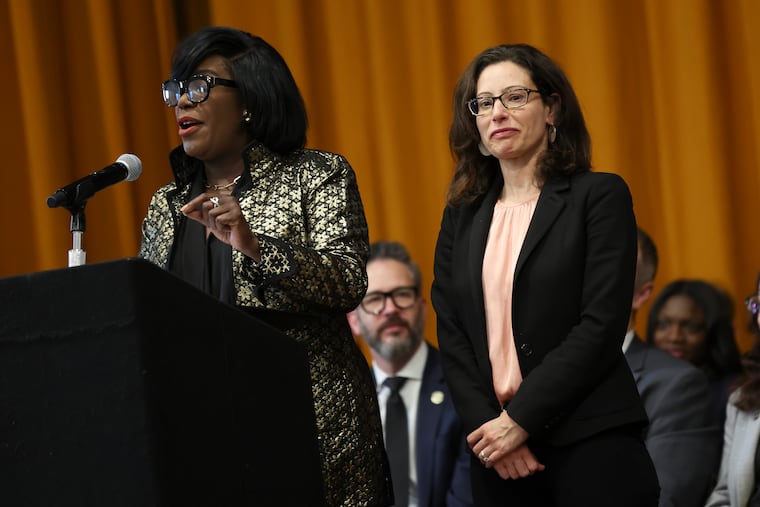
Mayor Cherelle L. Parker ends Philadelphia’s racial diversity goals in contracting, according to recently released internal documents.
In a significant policy shift, Philadelphia Mayor Cherelle L. Parker has announced the termination of a longstanding city program that prioritized contracts for businesses owned by women and people of color. This decision comes in response to recent court rulings, including a pivotal 2023 Supreme Court decision that curtailed race-conscious affirmative action in government contracting and hiring practices. The Parker administration has cited expert legal counsel from the New York-based law firm Hecker Fink for its guidance regarding this transition.
City Solicitor Renee Garcia praised the legal team’s prowess, highlighting their extensive experience with complex cases involving constitutional law. However, internal documents obtained by Media News Source indicate that not all of Hecker Fink’s recommendations were followed during the transition. While the law firm proposed a replacement plan that emphasized support for “socially and economically disadvantaged” businesses, the Parker administration opted for a new approach that favors “small and local” companies instead.
Critics argue that this new policy represents a retreat in the city’s commitment to promoting diversity and equity in government contracts. Advocates for equitable hiring practices express concern that the elimination of explicit racial and gender-based considerations undermines long-standing efforts to address systemic inequities in the business landscape. They contend that the new policy skirts the contours of a more robust affirmative action program, which historically allocated substantial portions of city contracts—over 0 million annually—to historically underrepresented firms.
In contrast, Mayor Parker contends that her “small and local” initiative maintains the objective of fostering equity in contracting. She stresses that many small businesses in Philadelphia are owned by individuals from historically marginalized groups. According to Parker, the new policy is designed to promote accessibility for these entities without the administrative burdens associated with demonstrating social disadvantages.
Despite reassurances from city officials regarding the perceived effectiveness of the new contracting strategy, experts caution that more explicit criteria focused on social disadvantage are vital for ensuring that the needs of historically marginalized business owners are adequately addressed. At present, the specifics of how the new program will be executed remain unclear, raising further questions about its potential efficacy.
This strategic pivot marks a departure from practices under former Mayor Jim Kenney, who had actively promoted inclusive contracting policies. Parker’s administration, acknowledging the challenge presented by the evolving legal landscape surrounding affirmative action, underscores the necessity of adapting to the constraints imposed by recent court decisions.
As the city grapples with these changes, stakeholders from various sectors will be closely monitoring the outcomes of the revised policy to assess its impact on Philadelphia’s economically disadvantaged communities. The success of the new contracting framework will ultimately depend on its implementation and the city’s commitment to ensuring equitable opportunities for all businesses.


