
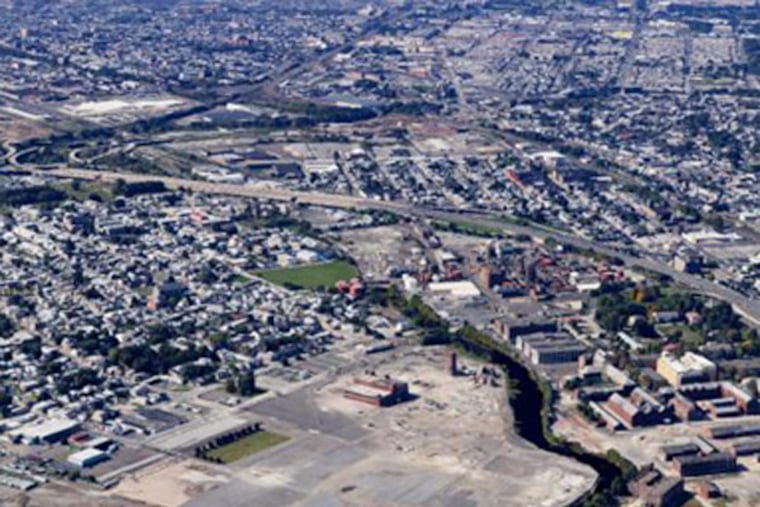
Frankford Arsenal, former base for Philly’s narcotics unit, linked to officers developing brain cancer, leading to multiple lawsuits.
In recent legal developments, Joseph Cooney, a former officer in the Philadelphia Police Department’s narcotics unit, has filed a lawsuit linking his diagnosis of glioblastoma—a highly aggressive form of brain cancer—to exposure to hazardous materials at the site of the old Frankford Arsenal. Cooney, who has served in law enforcement for over two decades, spent eight years working within the narcotics unit at the Arsenal’s former headquarters in Philadelphia’s Bridesburg neighborhood, an area historically known for its manufacturing of munitions.
The lawsuit, filed on Monday in the Philadelphia Court of Common Pleas, is part of a growing pattern of similar legal actions initiated by families of deceased officers who also worked at the site and subsequently succumbed to cancer. Cooney alleges that the Philadelphia Authority for Industrial Development Cooperation and developer Mark Hankin, among others, failed to properly remediate the site before it was converted from a munitions factory into a business park. These accusations suggest that the entities were aware of potential health risks but neglected to inform workers or adequately address the contamination.
The historical significance of the Frankford Arsenal dates back to its opening in 1816, when it served as a storage and repair facility for the U.S. Army. Over the decades, it evolved into a major producer of small arms and artillery shells, particularly during World War II. The facility was closed in 1977, and decontamination discussions reportedly began shortly thereafter. However, records indicate that dangerous materials were present on the property long before it was transitioned to civilian use, prompting questions about the adequacy of cleanup efforts.
Cooney’s diagnosis in early 2024 marked a pivotal moment in his life, transforming a once-vibrant career into a struggle against a terminal illness. He expressed concerns regarding the health of former colleagues and their families, noting an unsettling pattern of cancer among those who had worked in the same building. His fears were compounded by the proximity of chemical plants known for their hazardous waste, raising alarms throughout the local community about potential environmental linkages to the health crises faced by these officers.
As Cooney continues to serve in a supportive role with the city’s SWAT team, he faces daily challenges due to the progression of his illness, now requiring the use of a cane for mobility. He remains fundamentally worried about his family’s future and the well-being of his children, especially one of his daughters who teaches biology at a school built on the former Arsenal grounds. The legal ramifications of his case and others like it may prompt further investigation into historical land use and worker safety in such contaminated sites, raising awareness of the enduring impact of environmental health hazards.


