Local Real Estate Market Faces Increasing Risks and Challenges
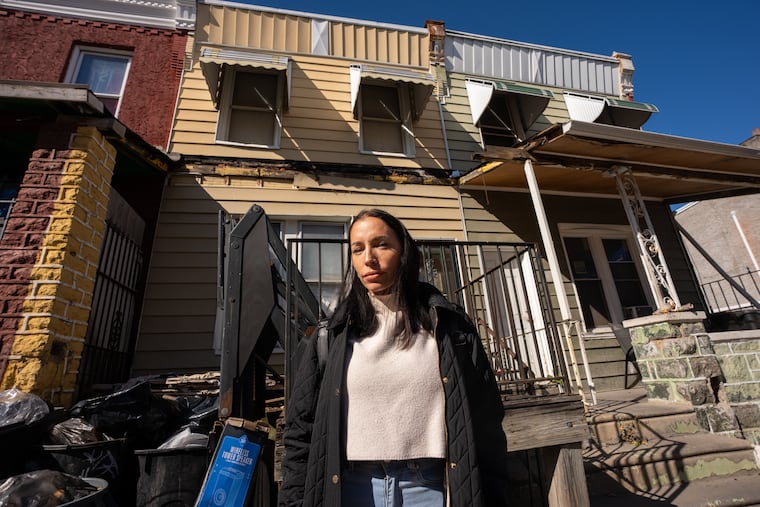
In North Philadelphia, many residents find themselves living adjacent to hazardous abandoned buildings that pose a significant threat to their safety. Among them is Emily Phillips and her family, who have lived in a nearby rowhouse without prior knowledge of the vacant property next door. This house has deteriorated to the point of having a large hole in its rear, with vegetation growing inside, raising substantial concerns about the structure’s integrity.
The city of Philadelphia has classified the property as “imminently dangerous,” indicating its potential to collapse. This alarming designation was made four months ago, yet the ongoing risk remains a pressing issue for surrounding families. Phillips expressed her fear that even minor disturbances, such as the closing of a door, could trigger a catastrophic failure of the adjacent rowhouse.
An investigation into the city’s management of vacant properties conducted by local reporters revealed systemic issues that contribute to these dangerous conditions. The Philadelphia Department of Licenses and Inspections (L&I) was criticized for ceasing the use of a previously employed tool aimed at proactively addressing unsafe buildings, which many long-time residents and newly settled individuals alike depend on for their safety.
Research uncovered that neighborhoods predominantly occupied by Black residents are disproportionately affected by the presence of vacant, dangerous rowhouses. Approximately 80% of these properties are located in the poorest 25% of the city’s zip codes, highlighting the intersection of economic disparity and urban decay. Residents have shared their distress about the lack of communication from city officials when they report issues concerning unsafe structures nearby, leaving many in constant anxiety about their families’ safety.
The dangers posed by these properties extend beyond mere inconvenience; they represent a significant public safety challenge that calls for urgent city intervention. It is essential for local authorities to reassess their strategies for monitoring and maintaining these vacant properties to ensure that residents are not left vulnerable. The ongoing neglect of such issues raises questions about governmental accountability and residents’ rights to safe living conditions.
As Philadelphia continues to grapple with its issues of urban decay and housing instability, community voices and experiences offer crucial insights into the pressing need for effective policy and action addressing the dangers of abandoned buildings. For residents like Phillips, the hope for a solution remains strong yet fragile amidst these precarious circumstances.
Media News Source