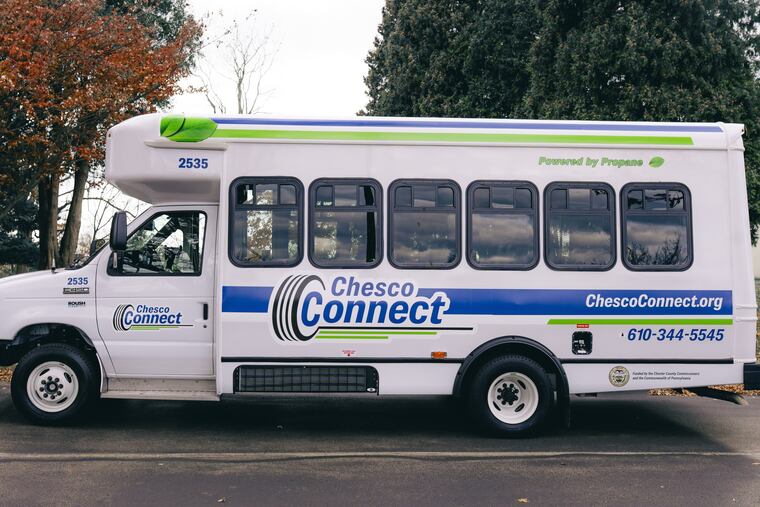
Chester County launches new fleet of propane-powered buses.
Chester County, Pennsylvania, is spearheading an innovative shift towards the use of propane-powered public transportation as part of its broader climate action plan. The county plans to deploy a total of 16 propane-powered Chesco Connect buses by February, with seven already operational. This initiative aligns with municipal efforts to reduce transportation costs amid changing federal priorities regarding electric vehicles.
The Chesco Connect service offers a door-to-door shared ride transportation system, primarily relying on a fleet of 74 buses. While most of these vehicles currently utilize gasoline, the county aims to incorporate more propane buses into the system by 2027. Gene Suski, the director of transportation for the Chester County Department of Community Transit, highlighted the significant cost savings associated with propane as a fuel source, noting that it typically costs between and .50 less per gallon than gasoline or diesel.
Despite the higher initial cost of approximately ,000 more per propane bus compared to traditional gasoline buses, the long-term savings in fuel costs, estimated at about ,000 annually, allow for a payback period of just 18 months. The existing gasoline buses are deemed to be beyond their useful life.
Chester County’s initiative is part of a growing trend, mirrored by neighboring Montgomery and Lancaster Counties, which have also begun to integrate propane into their bus fleets. This strategy is similarly employed by school districts across Pennsylvania, where more than a thousand propane school buses now operate. According to Tony Bandiero, executive director of the Eastern Pennsylvania Alliance for Clean Transportation, the transition to propane buses is relatively straightforward for municipalities, offering a balance between optimal environmental benefits and cost efficiency.
The momentum for propane adoption has shifted markedly over the past few years, with increasing interest from counties in response to changing federal policies. Though prior interest had leaned heavily towards electric vehicles, the movement towards propane and natural gas in public transportation is expected to gain further traction in the current political climate.
Furthermore, Chester County’s commitment to sustainability is complemented by a partnership with ROUSH CleanTech, renowned for developing propane buses and vehicles since 2010. As part of its climate strategy, the county emphasizes the importance of responsible environmental stewardship, with leaders expressing optimism about meeting sustainability goals.
Despite recent supply challenges reported in neighboring New Jersey, Chester County has maintained uninterrupted access to propane fuel. A tanker currently services the fleet daily, and plans are underway to establish a dedicated propane fueling station in Coatesville within the next few months. This proactive approach underscores the county’s commitment to both economic and environmental sustainability in public transportation.
Media News Source