Montgomery County school detects PFAS contamination in water near toxic landfill.
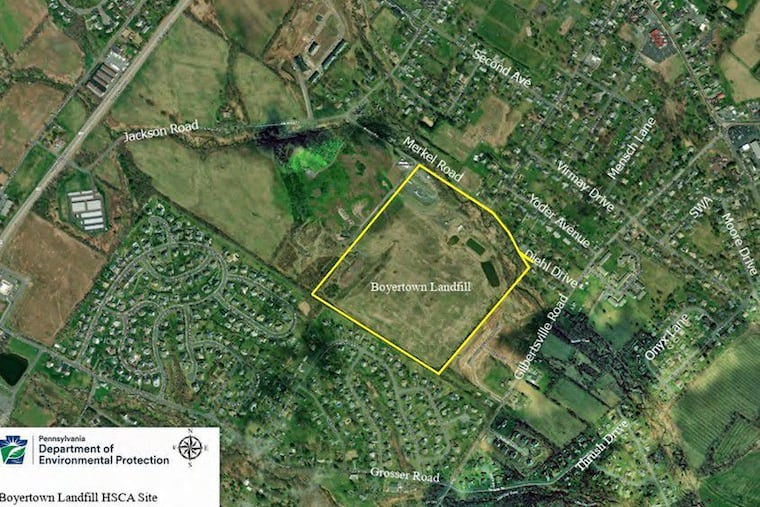
The Boyertown Sanitary Landfill, located in northern Montgomery County, has raised significant environmental and public health concerns following the detection of human-made polyfluoroalkyl substances (PFAS) in a nearby elementary school’s water supply. This 30-acre site, which ceased operations in 1987, previously accepted various forms of waste, including residential refuse, construction debris, and sewage treatment plant sludge.
As federal and state officials evaluate the potential for designating the Boyertown Landfill as a Superfund site, the implications of this testing are coming to light. The Gilbertsville Elementary School, situated approximately 3,000 feet from the landfill, recently reported average PFAS levels of 6.7 parts per trillion (ppt) in its water supply. While this figure falls below Pennsylvania’s acceptable limit of 14 ppt, it is set to exceed the impending federal standard of 4 ppt, expected to be implemented by 2031.
In a letter disseminated to educators and families on December 10, the district’s superintendent, Scott Davidheiser, emphasized the school’s ongoing commitment to safety, including water quality management. The district plans to collaborate with Suburban Water Technology, Inc. to develop a comprehensive water safety plan aimed at reducing PFAS levels to meet federal standards. Discussions are planned for January to formulate strategies to manage and mitigate these contaminants.
PFAS, a synthetic class of chemicals widely used since the 1940s, have been linked to various adverse health effects in humans and laboratory animals. The Environmental Protection Agency (EPA) has been slow to establish standard limits, causing states to initiate their own regulations. Pennsylvania plans to implement its own PFAS standards, differentiating levels for specific compounds in drinking water, such as perfluorooctanoic acid (PFOA) and perfluorooctane sulfonic acid (PFOS).
Despite some states moving forward with their regulations, federal standards introduced under the Biden administration will take precedence, mandating that PFOA and PFOS concentrations remain below 4 ppt. In this context, the current PFAS levels detected in Gilbertsville Elementary School’s water supply highlight an urgent need for remediation.
State officials have reported that testing conducted in 2024 and 2025 revealed the presence of PFAS in several locations surrounding the landfill. The Department of Environmental Protection (DEP) has initiated measures, such as installing carbon-activated filtration systems in residential wells within half a mile of the landfill that exceed acceptable PFAS limits. However, the DEP has indicated that Gilbertsville Elementary, due to its status as part of a smaller public water system, must address the contamination independently, rather than receiving similar assistance.
As discussions on how to address these challenges unfold, the health and safety of the community depend on prompt and effective action regarding the contamination of local water sources. Continued scrutiny of the Boyertown Landfill and its environmental repercussions will remain a crucial focus for residents and officials alike.
Media News Source