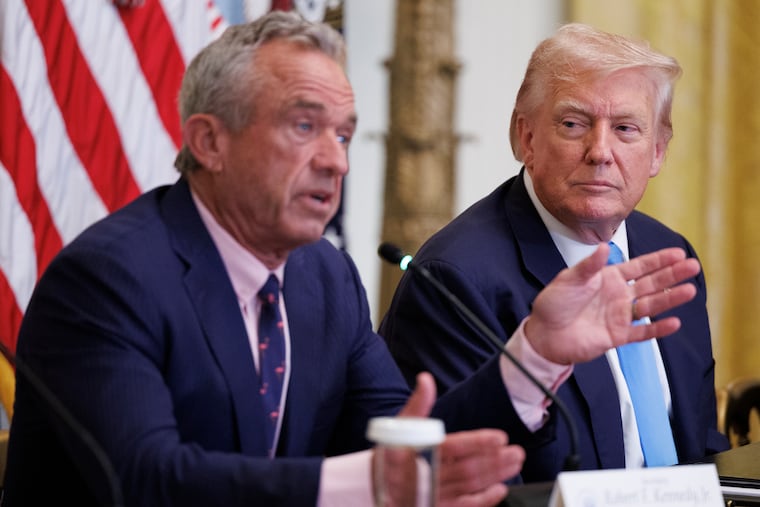
Trump signs order to reclassify marijuana as a less dangerous drug; full legalization not included.
In a significant move toward reforming federal marijuana policy, President Donald Trump has announced plans to advise federal agencies on the rescheduling of marijuana from a Schedule I controlled substance to Schedule III. This announcement, made during an executive order signing in the Oval Office, could ease longstanding restrictions surrounding the use of cannabis, particularly for medical research. Trump was accompanied by Health and Human Services Secretary Robert F. Kennedy Jr. and a group of medical professionals during this pivotal moment.
Under the current classification established by the 1970 Controlled Substances Act, marijuana is categorized as a Schedule I drug, which denotes a substance with a high potential for abuse and no accepted medical use. This classification categorizes marijuana alongside other illicit drugs such as heroin and cocaine, presenting substantial barriers to conducting medical research on cannabis. By shifting marijuana to Schedule III, an important distinction that would recognize its potential medical applications, the opportunity for expanded research and increased accessibility could emerge.
However, it is essential to note that this move does not equate to full legalization of marijuana. Experts, including Adam Smith, executive director of the Marijuana Policy Project, have emphasized that while rescheduling presents a landmark reform — the most significant in over 50 years — it could also instigate tighter federal control over marijuana, particularly in state-run medical and recreational industries. The executive order raises concerns that placing marijuana under the same framework as other Schedule III substances could inadvertently lead to restrictions and prescription requirements that disrupt the burgeoning cannabis sector.
Despite the potential pitfalls, many stakeholders in the cannabis industry remain cautiously optimistic. The ability to deduct business expenses for cannabis companies, a privilege currently denied under federal tax law, could be a crucial benefit of rescheduling. Additionally, expanded banking options may become available to such enterprises, fostering economic growth within the sector. Experts argue that this change could help rectify long-standing injustices perpetuated by the “war on drugs,” particularly impacting communities of color disproportionately affected by outdated marijuana policies.
This executive order follows a stalled attempt by former President Joe Biden’s administration to implement similar reforms. The complexities of marijuana rescheduling continue to provoke debate, especially in light of recent Congressional activities that banned intoxicating hemp products. While some view these actions as contradictory, proponents argue that they reflect a push for necessary regulation in a chaotic market.
Industry advocates hope Trump’s recent announcement will help reconcile state and federal positions regarding marijuana, facilitate essential research, and ultimately contribute to a more coherent and equitable cannabis policy. The need for clarity is especially pressing as many states remain hesitant to fully embrace marijuana legalization amid conflicting federal regulations.
Reforming restrictions around federally regulated cannabis is seen as vital for advancing clinical research and unlocking its medical potential. Experts, such as Stephen Lankenau, director of Drexel University’s Medical Cannabis Research Center, stress that it is essential for researchers to have access to cannabis-derived THC for comprehensive studies. Current limitations confine research to nonpsychotropic cannabinoids, raising questions about the practicality and implications of Trump’s proposal for advancing medical research.
As the conversation on marijuana regulation continues to evolve, the implications of this proposed shift signify a potential turning point in the nation’s approach to cannabis, with broader societal and health-related impacts awaiting further exploration.
Media News Source