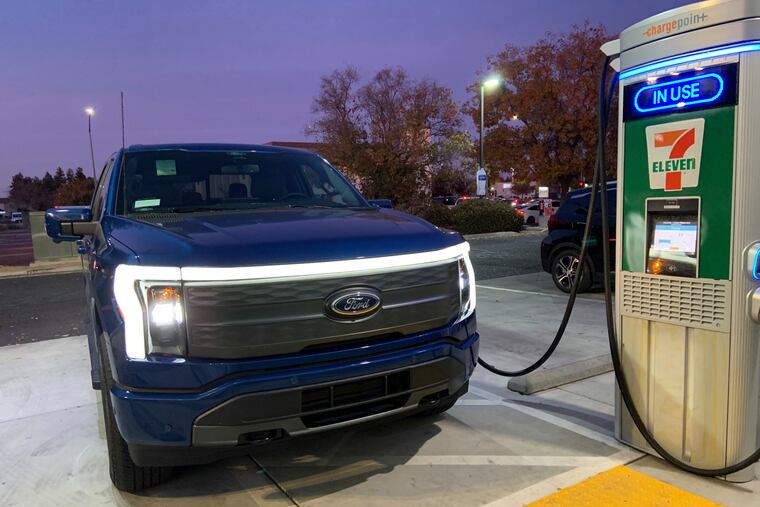
Gas cars experience a resurgence as the future of driving shifts unexpectedly.
BRUSSELS — Recent policy shifts have underscored the resilience of gasoline-powered vehicles, even as efforts to phase them out had gained momentum in recent years. The European Union’s announcement this week to reconsider its ambitious plan to ban emissions from new vehicles by 2035 marks a significant pivot, following Ford’s decision to scale back its electric vehicle (EV) production targets. This trend reflects a broader reconsideration of climate strategies among various automotive manufacturers across both the United States and Europe.
The wavering commitment to a fully electric transition indicates that the timeline for eliminating combustion engines may not be as definitive as previously believed. Indeed, these developments signal the potential for fossil-fuel powered vehicles to remain on roads in Europe and the U.S. for years to come. Furthermore, this evolving landscape starkly contrasts with that of China, which has established a robust and growing EV market bolstered by state-supported automakers.
In the United States, political rhetoric around electric vehicles has deterred momentum, as evidenced by previous administrations’ stances. The current White House has recently reduced incentives for EV purchases and initiated moves to relax fuel efficiency standards, further complicating the shift towards electric models.
Though European officials maintain a preference for an electric future, the pressure exerted by established automakers has played a crucial role in driving the EU’s revised regulations. Legacy car manufacturers, threatened by fierce competition from China’s cost-effective, high-quality electric vehicles, have successfully lobbied for a more flexible framework. The new proposal requires automakers to achieve a 90% reduction in emissions fleetwide compared to 2021 levels, allowing for the inclusion of hybrids and gas-powered vehicles.
Industry analysts have highlighted the growing divide in the global automotive market. One sector appears committed to gasoline-powered vehicles, primarily in the U.S., while another focuses exclusively on electric options in China. Europe, with its now ambiguous policies, finds itself in a precarious position. Experts predict that Chinese manufacturers, given the scale of the market, stand to gain significantly under this bifurcated framework, potentially reshaping the global automotive landscape.
The difficulty American and European automakers face in transitioning from combustion engines is magnified by the high profit margins associated with these vehicles. While this model may yield immediate financial benefits, it raises concerns about long-term sustainability and competitiveness in an increasingly electric future.
Amid these challenges, Ford has indicated a strategic shift, expressing intentions to prioritize gas and hybrid vehicle offerings, including a new gas-powered pickup truck. Other automakers such as Volvo and Porsche have also scaled back their previously ambitious electric vehicle plans, while Stellantis, home of the Jeep and Fiat brands, has reassessed its goal of transitioning to fully electric operations in Europe by 2030.
The original ban on gasoline vehicles was a key element of Europe’s climate strategy, introduced with high hopes four years ago amid a growing urgency to address environmental concerns. At that time, E.U. leaders positioned the auto industry—contributing 7% to Europe’s GDP—as a leader in innovation. However, steep declines in market value for major automakers like Mercedes-Benz, Volkswagen, and BMW have prompted critical re-evaluation. Analysts assert that these automakers miscalculated their EV strategies by focusing on high-end models rather than catering to the mass market. This misalignment, coupled with political discussions about the job security of workers in the automotive sector, has fueled opposition to stringent emissions targets, with leaders from Germany and Italy advocating against a strict 2035 cutoff for gas-powered vehicles.
As the automotive industry grapples with these critical issues, the path forward remains uncertain amid competing interests and evolving market dynamics.
Source: Media News Source