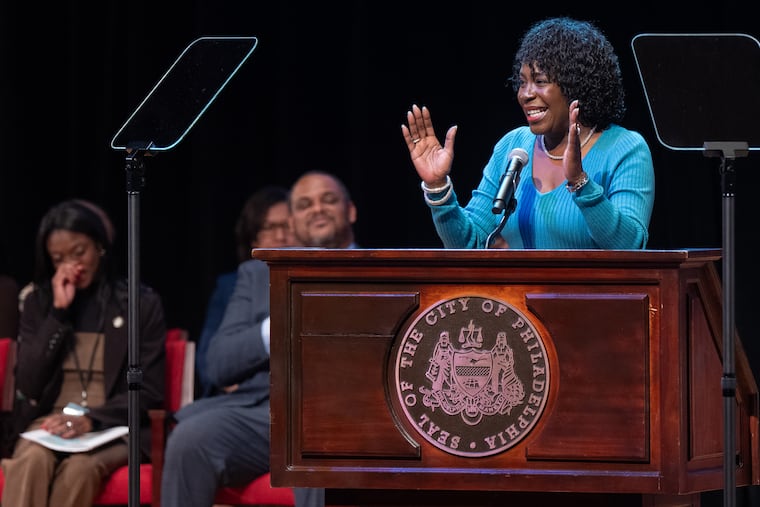
Mayor Parker outlines homelessness plan and highlights accomplishments in ‘State of the City’ address.
In a recent address commemorating the two-year mark of her administration, Philadelphia Mayor Cherelle L. Parker asserted that the city is exhibiting signs of improved safety and enhanced stability. Highlighting key indicators such as a notable decline in the homicide rate and the maintenance of cleaner streets, Parker detailed her administration’s commitment to progress.
During her “State of the City” address, Parker also candidly acknowledged several challenges that arose throughout the year, including an extensive eight-day strike by city workers and contentious interactions with City Council over her flagship housing initiative. As the city approaches the year 2026, a pivotal moment that will see Philadelphia hosting major events expected to draw over a million visitors, Parker outlined a strategy to confront the rising issue of street homelessness.
Despite her positive assessment of the city’s trajectory, Parker’s announcement of a plan to add 1,000 shelter beds to the system emphasized the lingering difficulties that continue to afflict Philadelphia. Recent data revealed a 20% increase in the unsheltered population, with a total of 1,178 individuals experiencing homelessness this year—the highest figure recorded since at least 2018. This troubling rise counteracts the progress made in reducing violent crime, evidenced by the lowest shooting rates the city has seen in the past half-century.
Parker’s housing initiative, initially conceived as a plan to build, repair, or preserve 30,000 units, has since been expanded to a goal of 50,000 units. This significant adjustment, prompted by disagreements with the City Council, reflects a shift aimed at prioritizing resources for the most vulnerable residents of Philadelphia. While Parker defended her vision of supporting the middle class, she acknowledged the necessity of collaboration and compromise with Council members, who expressed differing priorities.
Additionally, the mayor confronted the repercussions of the recent municipal workers’ strike, which represented a significant labor disruption not seen in decades. She asserted that despite the strike, her administration successfully negotiated new contracts with most municipal unions. Furthermore, she attested to the generous pay increases afforded to the workers as a result of these negotiations, emphasizing the historical significance of the agreements reached during her tenure.
In conclusion, while Parker’s second year in office has been characterized by a number of initiatives and notable achievements, the challenges surrounding homelessness and housing remain critical issues that will require sustained attention moving forward. Her administration is poised to implement changes aimed at addressing these persistent concerns as Philadelphia navigates its future.
Media News Source