
Philly-area college journalists collaborate to support one another and secure funding for their projects.
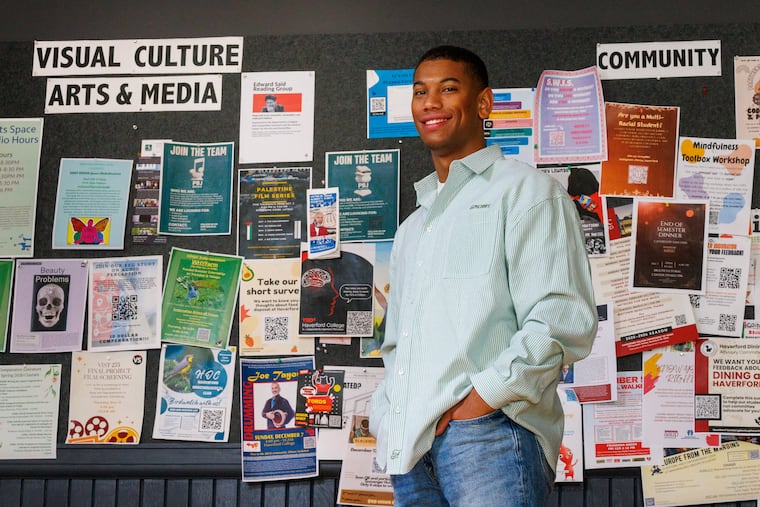
In an initiative aimed at bolstering student journalism, Jackson Juzang, a senior at Haverford College, has spearheaded the establishment of the Philadelphia Student Press Association (PSPA). This nonprofit organization, created to provide networking and resource opportunities for student journalists across the region, emerges at a time when college media outlets are increasingly facing budget constraints and challenges within the broader news industry.
Juzang, who serves as the associate editor of Haverford’s student newspaper, the Clerk, recognized the absence of a collaborative network for student journalists during a conversation with Haverford’s associate vice president for college communications, Chris Mills. With no existing organization to facilitate support among student newspapers in the area, Juzang took the initiative to create the PSPA, forming a board that includes student editors from eleven local institutions, such as Temple University, Drexel University, Villanova University, and Rutgers-Camden.
The PSPA represents approximately 400 student journalists and operates under the motto “Rooted in Philly, Reporting for All.” The organization is actively seeking funding to support student journalism initiatives as print costs surge and readership declines at many college outlets. The PSPA has already organized workshops and plans to continue these educational endeavors, while its 21-member board convenes monthly to discuss shared challenges and solutions pertinent to student journalism.
Members of the PSPA have voiced concerns about contemporary issues in journalism, including the implications of artificial intelligence in article submissions—an increasingly relevant topic within the industry. Claire Herquet, an editor from La Salle University’s Collegian, noted instances where she questioned the authenticity of submitted work, highlighting the need for collaboration among student organizations to navigate these challenges effectively.
The PSPA’s formation reflects a growing sentiment among student journalists that collaboration can lead to improved reporting practices and better funding opportunities. Many college newsrooms are experiencing disparate levels of financial support, with some publishers struggling to secure resources for even basic operations. For example, La Salle’s digital-only publication relies on minimal funding, while Rowan University’s The Whit faces increasing print costs despite receiving some support from its student government.
Juzang, who aspires to pursue a graduate degree in communication management, has invested significant personal resources into the PSPA. His vision extends beyond Philadelphia, as he aims to connect student journalists in other metropolitan areas, seeking to encourage similar collaborations across the United States.
The establishment of the PSPA has been met with enthusiasm from Haverford’s administration, which emphasizes the importance of providing a platform for student journalists to share their experiences and learn from each other. Juzang’s effort not only seeks to strengthen journalism at the collegiate level but also offers a model for how student reporters can unite for mutual support in the face of evolving challenges.
In a rapidly changing media landscape, the PSPA represents a hopeful step toward reinforcing the role of student journalism in educating the community and promoting accountability.


