China and Russia exploit Maduro’s capture to influence U.S. political discussions and narrative.
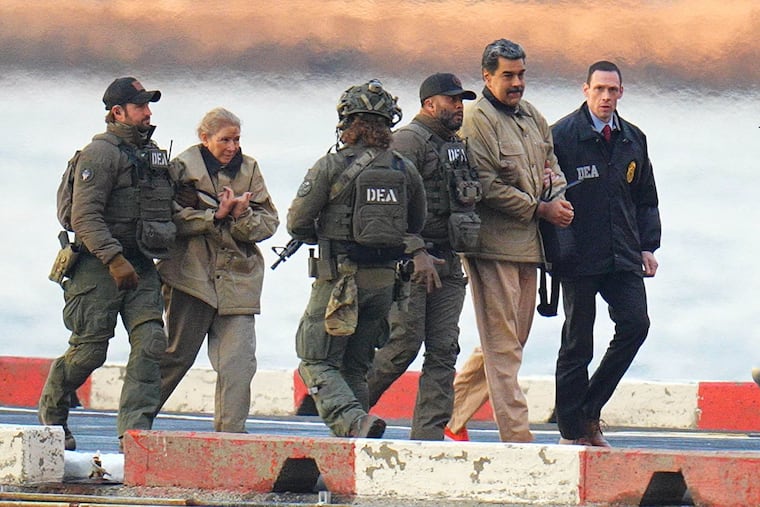
In the wake of the recent capture of Venezuelan President Nicolás Maduro by U.S. Special Forces, a surge of online activity has emerged, particularly from individuals and accounts closely aligned with specific political narratives. A notable figure in this discourse is a social media commentator operating under the name David Freeman. This individual has leveraged his platform, with 1.6 million followers, to disseminate video footage on X (formerly Twitter) showcasing Venezuelan citizens celebrating in South Florida, presenting it as a direct reaction to the U.S. operation.
On the same day, Maimunka News, an outlet primarily focused on the Russia-Ukraine conflict, elevated reports from the Kremlin-affiliated news source RT, suggesting that Venezuelans were calling for Maduro’s release. Despite the non-exclusivity of the videos or their content, analysts have identified these accounts as part of a broader covert Russian influence operation intended to disrupt U.S. information channels and amplify conspiracy theories regarding Maduro’s capture.
Research from the Atlantic Council’s Digital Forensic Research Lab indicates that this campaign, known as Storm-1516, focuses on spreading conflicting narratives to create confusion within the information landscape. Layla Mashkoor, an expert in the field, describes this approach as testing various conspiracies to dilute the overall message. The goal appears to be the creation of chaos, making it challenging for individuals to discern credible information amidst the noise.
The recent events surrounding Maduro’s capture are not isolated; they fall within a pattern observed during other significant international incidents. Both Russian and Chinese state actors have quickly mobilized to exploit the unfolding situation, disseminating misleading content and conspiracy theories to influence public perception. Notably, China’s narrative emphasizes the notion of U.S. unilateralism and disorder, positioning the U.S. as an unreliable force globally, particularly in light of its military actions in Venezuela.
Furthermore, misinformation regarding Maduro’s capture has proliferated across various digital platforms, with instances of false reports claiming to depict protests or moments of the capture itself. Techniques utilized in these campaigns range from the employment of advanced artificial intelligence in content generation to the manipulation of existing footage from unrelated events.
For instance, misleading narratives circulated online have included claims linking the Rothschild family to the U.S. operation and asserting that Maduro’s capture was a false flag. In contrast, Chinese operatives employed humor and pop culture, aligning their communications with the stylistic nuances prevalent in U.S. political discourse, even spoofing a popular meme song to critique U.S. military interventions abroad.
This dual approach from Russia and China illustrates a concerted effort to reshape the narrative surrounding U.S. actions while simultaneously seeking to obscure shortcomings in their respective alliances. The rapidly evolving and complex information environment marked by misinformation reflects broader trends in how state and non-state actors attempt to engage and influence public opinion during politically significant events. Such dynamics signal a shift in strategies over the past few years, as the lines between legitimate news and disinformation continue to blur in the digital age.