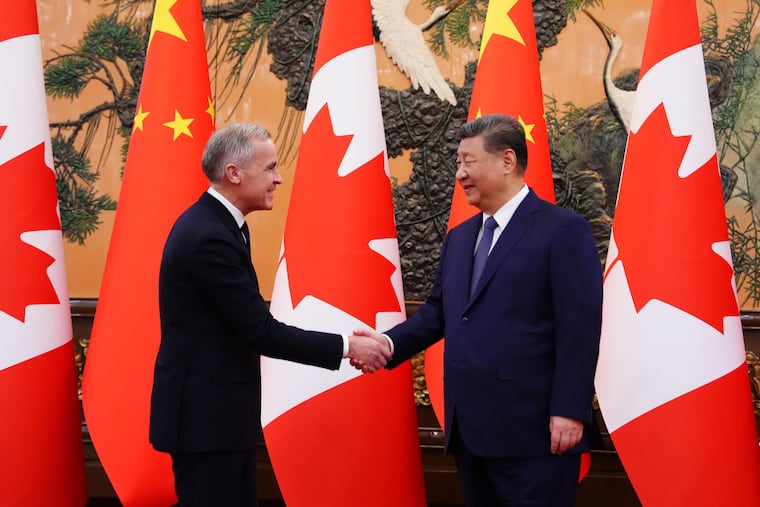
Canada and China strengthen ties in response to Trump’s tariffs.
Canadian Prime Minister Mark Carney has initiated a “new strategic partnership” with China, following a four-day official visit that aimed to mend a fraught relationship and diversify Canada’s trade avenues beyond the United States. His discussions with Chinese leadership culminated in an agreement to lower tariffs between the two nations, representing a significant development in bilateral relations that had been complicated in recent years.
Under the new accord, Canada will permit the import of 49,000 Chinese electric vehicles at a revised tariff rate of 6.1%. Simultaneously, China has pledged to reduce tariffs on Canadian canola seeds to approximately 15%. This approach marks a departure from previous practices, where both countries had imposed substantial tariffs on each other’s products, particularly amid rising tensions driven by the United States’ trade policies.
The recent tariff adjustments emerge against the backdrop of the tumultuous trade landscape shaped by the policies of former President Donald Trump, which have prompted Canada to reconsider its economic alignments. Analysts believe that Carney’s visit and actions indicate a strategy to bolster trade relations with China as a counterbalance to unilateral trade pressures from the U.S. It reflects an effort to recalibrate Canada’s economic partnerships against a backdrop of renewed trade hostilities.
During Carney’s meeting with Chinese President Xi Jinping, the two leaders heralded the visit as a pivotal moment in Sino-Canadian relations. Despite this, experts view the current developments as merely an initial step towards improving ties that have been strained for nearly a decade. Zhao Minghao, a deputy director at the Fudan University Center for American Studies, acknowledged the complex challenges ahead, particularly in sectors heavily influenced by ideological and national security considerations.
Carney’s visit is especially noteworthy as it represents the first official engagement of a Canadian Prime Minister with Chinese officials since 2017. The intervening years have seen significant diplomatic strains, particularly after Canada detained Huawei executive Meng Wanzhou, which led to the arrest of two Canadians in China on charges widely perceived as politically motivated. These events significantly soured public perception of China in Canada, with a Pew Research survey indicating that over 70% of Canadians hold an unfavorable view of the country.
The Canadian leadership faces a delicate balancing act, managing its economic interests between two major powers. While Carney’s administration prioritizes forging stronger ties with China, provincial leaders and sectors affected by recent tariffs have voiced opposition to this rapprochement, fearing negative repercussions on domestic industries, particularly in the automotive sector.
In conclusion, while the easing of tariffs marks a hopeful sign for Canadian trade relations with China, significant hurdles remain. The complexities of international diplomacy, domestic economic pressures, and public sentiment will continue to shape Carney’s path forward in navigating these critical bilateral ties. The landscape of Sino-Canadian relations is evolving, but it remains fraught with challenges that require careful negotiation and strategic foresight.
Media News Source