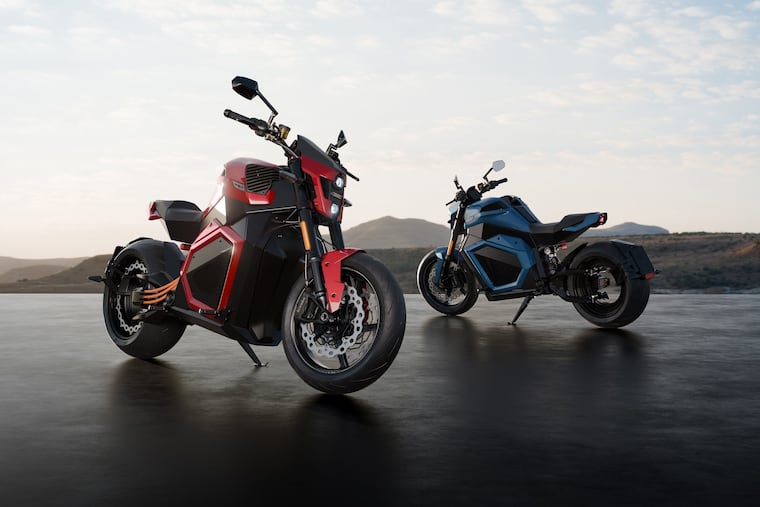
Company claims to have developed a groundbreaking new battery technology.
In a bold assertion ahead of the Consumer Electronics Show (CES) in Las Vegas, Verge Motorcycles and its offshoot, Donut Lab, announced their intent to disrupt the electric vehicle (EV) market with what they claim is the world’s first electric vehicle powered by a solid-state battery. This battery technology, while lauded for its potential advantages over traditional lithium-ion batteries, remains largely unproven and controversial within the scientific community.
Solid-state batteries utilize solid electrolytes instead of the liquid components found in conventional batteries, theoretically allowing for greater energy storage, faster charging times, and a reduced risk of fires. Despite the technology’s promise, the development of a commercially viable solid-state battery has proven to be an elusive goal. Many established automotive manufacturers, including Toyota, Nissan, and Hyundai, have made similar promises but have repeatedly postponed their timelines for bringing such technology to market.
Donut Lab, a Finnish start-up founded just over a year ago, claims to have developed an all-solid-state battery that boasts several extraordinary attributes. According to the company’s CEO, Marko Lehtimäki, the battery reportedly doubles the energy density of typical EV batteries, can be fully charged in five minutes, and withstands extreme temperatures without significant performance degradation.
Despite these claims, skepticism abounds. Experts in the field point to historical challenges and the steep financial and technological barriers that must be surmounted to shift from conventional battery production to solid-state manufacturing. Critics have emphasized that the ambitious claims made by Donut Lab necessitate substantial verification before they can be accepted as credible. Industry insiders have remarked that for a battery to meet the performance specifications outlined by Lehtimäki, significant data and third-party validation are required.
As Verge begins to accept pre-orders for its new electric motorcycle, priced at approximately ,900, interest is piqued. The motorcycle is rumored to boast an 80% charge in under ten minutes and an impressive range of over 200 miles on a single charge—features attributed to the purported solid-state battery. While the original TS Pro motorcycle has made headlines for its endurance—holding a Guinness World Record for the longest electric motorcycle trip on a single charge—experts caution that the claimed improvements might be achievable using existing lithium-ion technologies.
Industry analysts recognize a palpable need for advances in battery technology, particularly as the demand for energy-dense solutions grows to support innovations in electric vehicles, drones, and autonomous robotics. While some believe that solid-state batteries might find a niche within high-performance sectors like electric motorcycles, others remain doubtful about their viability in mass production.
As the narrative of a “solid-state revolution” unfolds, the future of battery technology remains a focal point of research and development. Regardless of the outcome for Verge and Donut Lab, the quest for more efficient energy solutions continues, emphasizing the industry’s ongoing commitment to innovation in the ever-evolving landscape of electric mobility.