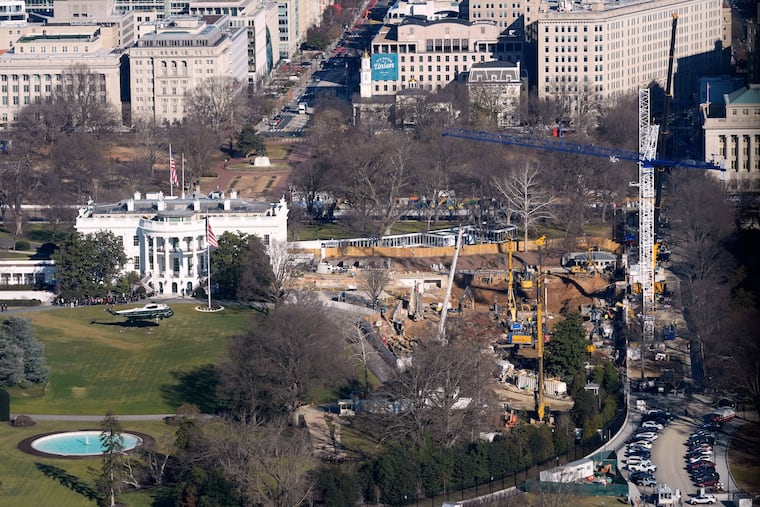
Trump declares it is ‘too late’ to halt construction of the White House ballroom.
President Donald Trump recently asserted that his proposed ballroom project is a near certainty, despite ongoing legal discussions within the Justice Department that suggest the plans remain subject to modifications and federal reviews. In a substantial post on his Truth Social platform, Trump emphasized that the project is effectively irreversible, proclaiming that “there is no practical or reasonable way to go back.” He further insisted that halting construction at this stage would have detrimental impacts on the White House and the nation.
These statements starkly contrast the position taken by Justice Department attorneys during recent court proceedings. On Friday, these legal representatives conveyed to a judge that there remains an opportunity for modifications to the ballroom plans, indicating that the White House intends to await assessments from two federal advisory panels prior to commencing above-ground construction, which is projected for April. U.S. District Judge Richard Leon, nominated by President George W. Bush, indicated that he would deliver a ruling on the project’s future in the coming weeks.
Despite inquiries regarding the inconsistencies between Trump’s public declarations and his administration’s legal strategy, the White House has yet to provide clarifications. Trump, along with administration officials, has consistently emphasized the personal significance of the ballroom project to him, categorizing it as a matter of national security. In detailing materials that have been ordered for the project—such as structural steel, windows, and reinforced security features—Trump expressed urgency, alongside his concerns about impending weather disruptions impacting the nation’s activities.
The ballroom’s contentious history includes significant criticism for the demolition of the East Wing annex, which sparked backlash from Democrats and public advocates who argued that the administration should have sought public input before altering a landmark building known as the “People’s House.” Current construction efforts have already initiated underground work, raising questions about the nature of these modifications without requisite oversight.
Legal challenges have emerged from the National Trust for Historic Preservation, which opposes the project on grounds of non-compliance with mandatory reviews and the lack of congressional authorization. The group has sought to stop construction pending these reviews, reflecting concerns about public interest in a project that significantly affects a historically essential site.
The Justice Department maintains that Trump has considerable authority over changes to White House grounds, with evidence presented suggesting potential flexibility in design. Notably, recent exchanges in court indicate skepticism from Judge Leon regarding the legality and funding of the project, particularly concerning private donations from well-known corporations with substantial government contracts.
As the federal panels assigned to evaluate the ballroom plans—now under the leadership of Trump’s appointees—prepare for their assessments, White House officials are optimistic about securing prompt approvals. The political and legal intricacies surrounding the ballroom project continue to evoke passion and scrutiny from various stakeholders, as it stands at the intersection of national interest, historical preservation, and current administration priorities.
Media News Source