
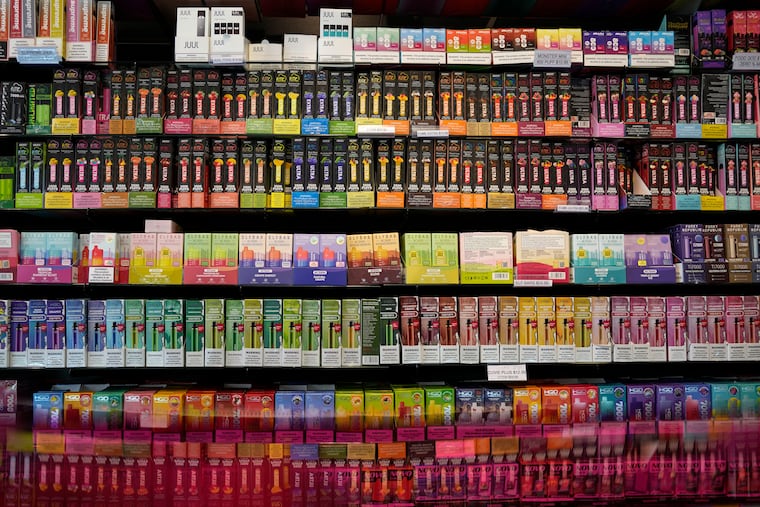
New Pennsylvania law intended to restrict unregulated vapes for kids may prove ineffective.
HARRISBURG — A newly enacted law in Pennsylvania seeks to regulate the vaping industry by removing unregistered products from the market and protecting minors from potential harm. However, experts express concerns regarding its efficacy, citing loopholes, inadequate funding for enforcement, and limited support from public health organizations.
The legislation, known as Act 57, represents Pennsylvania’s first significant attempt to address the issue of vaping. Manufacturers will be required to register with the state Office of the Attorney General and self-certify that they possess approval from the U.S. Food and Drug Administration (FDA) or have applied for such authorization. The law has garnered bipartisan support, reflecting a coalition of interests that includes law enforcement, convenience store operators, and medical groups.
While the intent of the law is to protect youth from vaping products, public health experts remain skeptical about its impact. Jeffrey Drope, a research professor at Johns Hopkins Bloomberg School of Public Health, indicated that the recent proliferation of registry laws leaves much to be desired in terms of effectiveness. He, along with other researchers, advocates for a comprehensive ban on flavored e-cigarettes, suggesting that such policies would better reduce youth access to vaping while still considering the implications for adult public health.
Currently, the law predominantly targets disposable vapes, particularly those manufactured in China that are marketed with appealing flavors. State surveys suggest that vaping rates among high school seniors hover around 25%. This is a notable concern considering that the use of traditional cigarettes among this demographic has dropped to just over 10%, highlighting a shift in consumption patterns.
The law may face pushback from the vaping industry, which argues that it could unintentionally force consumers toward an unregulated black market. Tony Abboud, the executive director of the Vapor Technology Association, stated that demand for vaping products is unlikely to diminish, and businesses that rely on legal sales may suffer.
Moreover, the law requires the attorney general’s office to create a registry to keep track of compliant manufacturers while setting forth strict penalties for non-compliance. If a product is not registered, retailers and distributors can face fines of up to ,500 per day. The estimated initiation cost for implementing the legislation is projected at approximately ,280, with yearly operational expenses reaching around .3 million. In contrast, New York allocates about million annually for tobacco enforcement, raising questions about Pennsylvania’s commitment to effective regulation.
Although the law aims to improve public health, various advocacy groups argue that funding should prioritize prevention and cessation programs rather than merely monitoring the market. The Pennsylvania Alliance for Tobacco Control emphasizes the need for bold, enforceable actions that directly curb access, including a comprehensive flavor ban.
Despite the potential for regulation, the interpretation of vaping’s implications for public health remains contested. Vape technology, which surged in popularity in the 2010s as an alternative to traditional smoking, poses uncertainties regarding its health outcomes, particularly for young users. Public health experts underscore the need for ongoing scrutiny and regulation to protect vulnerable populations.
As enforcement timelines approach, stakeholders will continue to assess not only the law’s implementation but also its broader impact on youth vaping trends and the vaping industry landscape in Pennsylvania.


