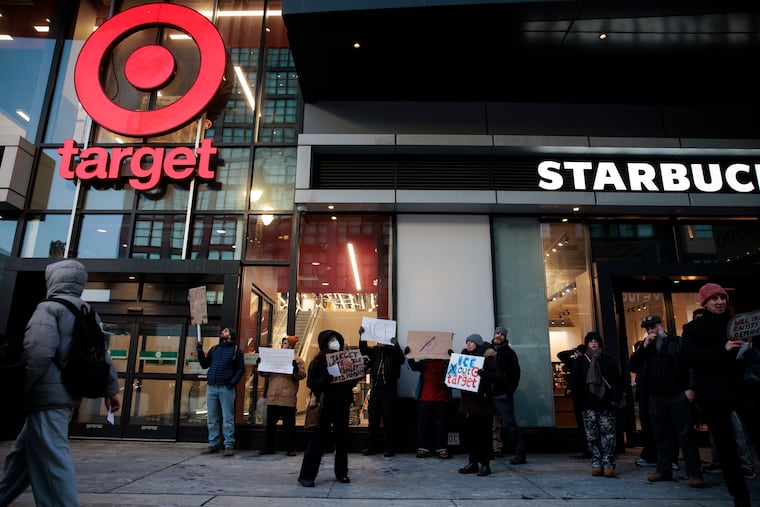
Immigration activists protest at Target stores in Philadelphia, urging the company to refuse collaboration with ICE.
On a frigid Tuesday evening, activists affiliated with No ICE Philly staged demonstrations at various Target locations across Philadelphia, drawing attention to their claims that the retailer collaborates with federal immigration enforcement. Actions were concentrated in neighborhoods including South Philadelphia, Rittenhouse, Fairmount, and Port Richmond, as demonstrators sought to disrupt business operations at the retailer.
The group asserts that Target has inadequately defended its employees and customers against Immigration and Customs Enforcement (ICE), allowing the agency to conduct operations on its premises, including parking lots. The protests come amid broader concerns regarding ICE’s presence in major urban centers and its perceived targeting of various communities, prompting activists to call for corporate accountability.
Approximately 40 individuals gathered outside the Target store situated at Broad Street and Washington Avenue, braving temperatures as low as 19 degrees Fahrenheit. Many participants carried signs expressing solidarity with residents of Minneapolis, where similar demonstrations have taken place. The slogans reflected a broader movement against ICE’s actions, with some demonstrators urging shoppers to refrain from patronizing Target.
Inside the store, several masked customers engaged in behavior that further symbolized their dissent. They purchased items such as ice trays and salt but immediately returned them at the checkout area, a tactic that served to extend their protest within the retail space. Employees worked swiftly to restock shelves, only for the items to be repurchased and subsequently returned, illustrating the protest’s disruptive nature.
Protesters distributed flyers outlining their objectives, attempting to persuade shoppers to go elsewhere. Some individuals turned back after engaging with activists, while others faced jeers from demonstrators as they entered the store. The crowd encouraged passersby to shop at alternative retailers, asserting that financial decisions could serve as a powerful form of protest against ICE’s operations.
One participant, Elijah Wald, expressed hopes that businesses would respond to the urgency of protecting their workers and cease any cooperation with agencies that threaten vulnerable populations. Wald, whose familial background includes a Jewish refugee from Nazi Austria, emphasized the importance of understanding immigration as a fundamental aspect of American identity.
Activists have also highlighted the imperative for Target to publicly reject ICE activities by calling for an end to its funding, training staff on how to respond to immigration agents, and making visible statements to deter ICE from entering their locations. This follows a recent letter signed by Target’s chief executives and over 60 large companies in Minnesota, advocating for a de-escalation of tensions in the face of escalating violence attributed to federal agents. Critics, however, argue that these gestures may have come too late, particularly after tragic incidents involving U.S. citizens.
The ongoing dialogue surrounding ICE’s practices and corporate responsibility continues to unfold, as demonstrators like those from No ICE Philly persist in their efforts to influence public sentiment and corporate policies through targeted protests. Media News Source draws attention to the complexities of protest strategies and their implications for community dynamics in an increasingly polarized political landscape.