
Trump expresses willingness to reduce tensions, yet Minneapolis experiences minimal change in street dynamics.
In light of recent developments following severe tensions in Minneapolis, President Donald Trump has appeared to express a willingness to de-escalate conflicts resulting from federal immigration enforcement operations, specifically after a second fatal shooting incident involving federal agents. Despite this, concrete changes in policy implementation have yet to materialize as the city continues to grapple with the fallout from accelerated immigration enforcement efforts.
The president’s tone shifted notably following his decision to appoint his top border adviser to oversee immigration operations in Minnesota. This leadership change came alongside commendations for local officials, including Democratic Governor Tim Walz and Minneapolis Mayor Jacob Frey. In subsequent communications, Trump indicated that he and Governor Walz found common ground, acknowledging the progress made in discussions about addressing local concerns.
While these overtures suggest a potential rapprochement, the atmosphere on the streets of Minneapolis reflected a stark contrast. Protests and confrontational encounters between federal immigration officers and activists persisted, illustrating the underlying tensions that remain unresolved. Activists continued to track and confront federal officers engaged in immigration enforcement, leading to instances of aggression and frustrations directed at media personnel documenting the situation.
Recent reports indicated that law officials arrested multiple individuals, with Attorney General Pam Bondi confirming 16 arrests based on alleged assaults and resistance against law enforcement. Bondi reiterated the administration’s unwavering commitment to legal enforcement, a position that has continued to stoke public anxiety, particularly among immigrant communities.
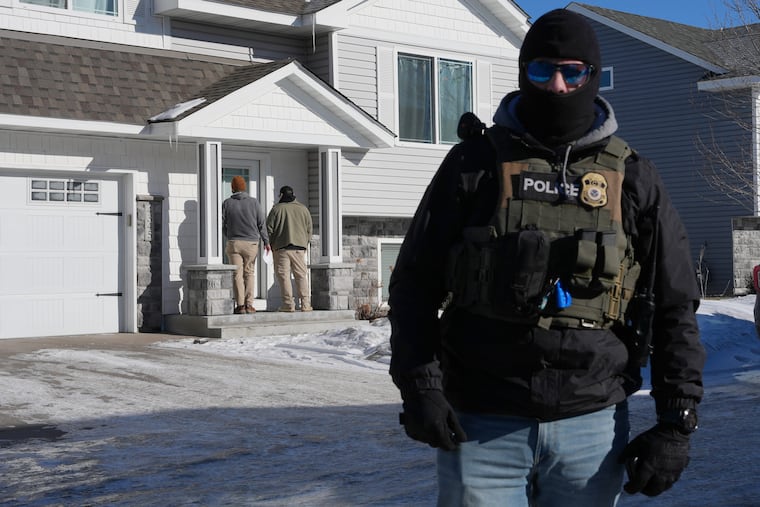
In Brooklyn Center, a suburb of Minneapolis, federal agents visited residential neighborhoods, searching for individuals with prior deportation orders. Residents expressed unease, recounting instances wherein agents attempted to utilize ambiguous warrants to gain entry into homes without judicial authorization. This situation has culminated in a heightened state of fear among immigrant families, with local businesses reporting significant declines in patronage as community members remain reluctant to venture outdoors.
Concurrently, emotional tributes have emerged in response to the violence associated with immigration enforcement, including a makeshift memorial honoring Alex Pretti, a nurse fatally shot in a recent incident involving federal agents. This tragic event has galvanized community members and intensified discussions surrounding the actions of federal law enforcement in Minnesota.
As the protests and federal operations continue, many seek clarity and a return to a sense of security, reflecting a communal desire for resolution amidst ongoing apprehension regarding immigration policies and their enforcement. The implications of these events resonate beyond Minneapolis, raising critical questions about law enforcement tactics and community trust that will require careful consideration as the situation evolves.
The ongoing discourse highlights the urgency for dialogue among federal authorities, state officials, and local communities to forge a path forward that addresses both enforcement and the concerns of those most affected by these policies. The ability to bridge these divides is essential for fostering a climate of trust and safety in the region.
As the situation develops, additional commentary from Immigration and Customs Enforcement and the Border Patrol has been sought but remains pending.


