
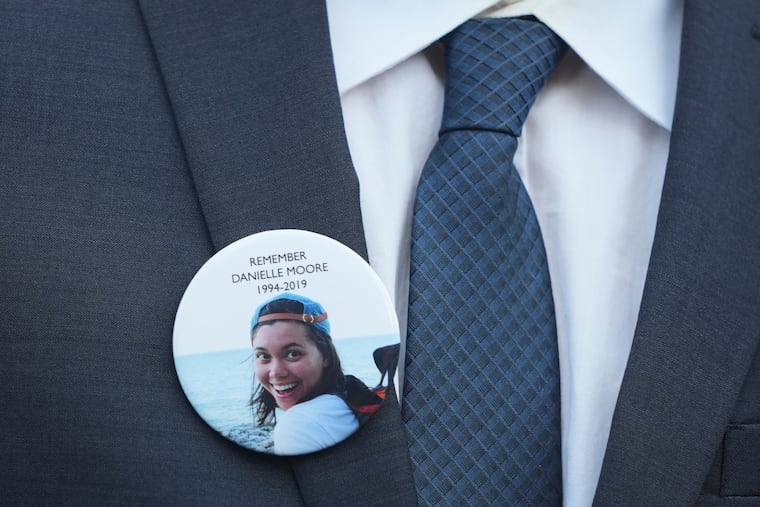
Families of plane crash victims urge US appeals court to reopen criminal case against Boeing.
Thirty-one families of victims from two tragic Boeing 737 Max crashes have filed a request with a federal appeals court to revive a criminal case against the aerospace giant. This action took place on Thursday, as families seek accountability following the accidents that claimed the lives of 346 individuals.
The families are represented by attorney Paul Cassell, who appealed to a three-judge panel of the 5th U.S. Circuit Court of Appeals to overturn a lower court’s earlier decision that dismissed a criminal conspiracy charge against Boeing. This charge alleged that the company misled regulators at the Federal Aviation Administration (FAA) regarding a flight-control system connected to the crashes.
The dismissal of the charge was prompted at the behest of the U.S. government, which entered into a settlement with Boeing. As part of this agreement, Boeing will pay .1 billion in various penalties, including victim compensation and internal safety improvements. Cassell argued that this arrangement violated the rights of the victims’ families, who felt excluded from the negotiations that led to the dismissal of the criminal case.
In their defense, federal prosecutors asserted that they had actively solicited input from victims’ families throughout the deliberation process regarding the prosecution of Boeing. More than a dozen family members attended the hearing in New Orleans, with many others tuning in online to listen to the proceedings.
Paul Njoroge, a Canadian citizen who lost his entire family in one of the accidents, emphasized the need for a trial to achieve meaningful accountability. Njoroge’s wife, three children, and mother-in-law were among the victims of the second crash, which he described as a devastating loss.
The Boeing 737 Max was involved in two catastrophic incidents that occurred less than five months apart: a Lion Air flight that plunged into the sea off Indonesia and an Ethiopian Airlines flight that crashed shortly after takeoff. Following these tragedies, all passengers and crew aboard the jets perished.
U.S. District Judge Reed O’Connor previously ruled in favor of Boeing, stating that he could not prevent the dismissal of the case even though he found the families’ arguments compelling. The judge concluded that federal prosecutors acted in good faith and complied with their obligations under the Crime Victims’ Rights Act.
In prior developments, the Justice Department initially charged Boeing in 2021 but later agreed to forgo prosecution provided the company met certain conditions. However, new agreements with Boeing in the subsequent years led to the current state of affairs, including a rejection of an earlier plea deal by Judge O’Connor.
The case stems from concerns regarding safety protocols tied to a new automated flight-control system, which Boeing failed to adequately disclose to regulators and pilots. Critics argue that this lack of transparency contributed directly to the crashes. The appeals court panel has stated it would issue a decision on the matter at a later date, further prolonging a legal saga that has captivated public attention and raised serious questions about corporate accountability in aviation safety.
With an ongoing discussion surrounding the implications of the legal decisions, the outcome of this appeal could have lasting ramifications for the families involved and the broader regulatory landscape governing aviation safety.


