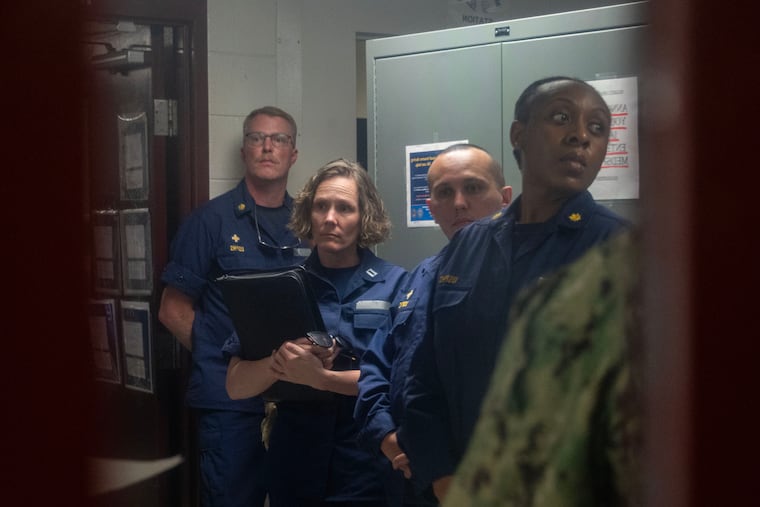
Public health workers are resigning in response to assignments related to Guantánamo.
In recent months, the deployment of U.S. Public Health Service officers to immigration detention facilities at Guantánamo Bay has evoked significant concern and emotional turmoil among the healthcare professionals involved. One such officer, Rebekah Stewart, a nurse, recounted a poignant moment when she received the call about her assignment to the controversial operation. This initiative aligns with former President Donald Trump’s commitment to relocate noncitizens perceived as high-risk individuals to the naval base, long notorious for its association with human rights abuses and inhumane treatment of detainees.
Guantánamo has recently transitioned into a facility for detaining immigrants, a significant departure from its original purpose post-9/11. Officers deployed there noted that detainees often learned their location from medical staff, as they were held in confined spaces, such as the dark confines of Camp 6—a facility that previously housed suspected terrorists. Many Public Health Service officers serving at Guantánamo were unprepared for the realities of their assignments and faced a moral dilemma, as they were tasked with providing care in a setting fraught with ethical concerns.
The impact of the Trump administration’s immigration policies has escalated, with the number of detained immigrants reaching approximately 71,000, including many with no prior criminal records. Alarmingly, reports indicate that about 90% of individuals detained under these new measures were classified as “low-risk.” The conditions at Guantánamo reportedly echo earlier abuses—although direct reports of torture are not forthcoming, attention has been drawn to the psychological well-being of detainees, who often experience severe anxiety from prolonged uncertainty and familial separation.
Among the Public Health Service officers, some, like Stewart, chose to resign rather than participate in an operation they deemed morally objectionable. Stewart’s resignation is emblematic of a broader concern among healthcare professionals about facilitating what they perceive to be a manufactured humanitarian crisis. Meanwhile, those who remain express their commitment to care for the detainees, despite feeling helpless in the face of systemic issues that include overcrowding and lack of adequate medical care.
Financially, the cost of detaining immigrants at Guantánamo is substantially higher compared to facilities within the U.S. Taxpayer expenditures for each detainee amount to approximately ,500 per day, a stark contrast to the average 7 daily cost for detentions in ICE facilities domestically.
As the Public Health Service grapples with this unprecedented deployment to Guantánamo Bay, questions arise regarding the ethical implications of their roles. The future of healthcare in immigration detention, particularly in a historically charged environment, remains uncertain, demanding a critical examination of the convergence between public health initiatives and national security policies. The discourse surrounding these issues is crucial in considering the role of healthcare professionals in immigration enforcement and the broader implications for health care delivery in the United States.
Media News Source