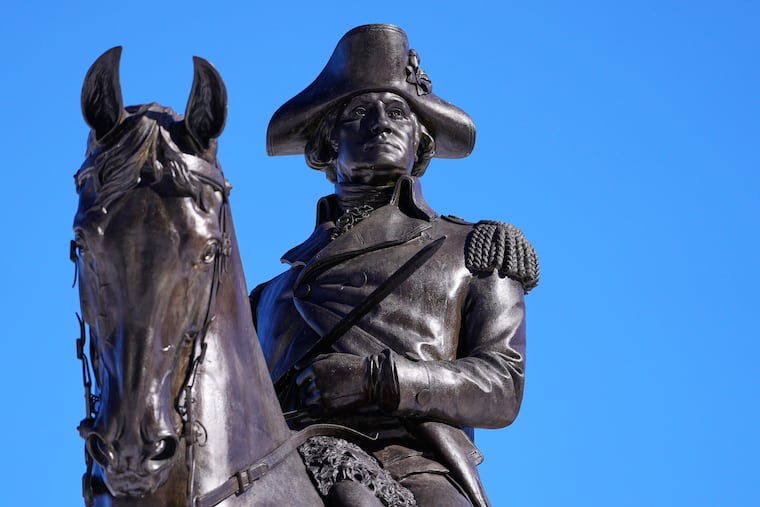
George Washington did not have wooden teeth and played a key role in the Siege of Boston.
The Siege of Boston: A Pivotal Moment in American History
BOSTON — Long before George Washington ascended to the presidency, he played a significant role in the early stages of the American Revolutionary War. The Siege of Boston marked his first major campaign as commander-in-chief of the Continental Army, laying the groundwork for his future successes and eventually solidifying his status as a national hero. This historic moment is particularly commemorated in conjunction with Presidents Day, a federal holiday dedicated to honoring Washington and his enduring legacy.
In April 1775, following the Battles of Lexington and Concord, colonial militias effectively surrounded the British forces in Boston. The Continental Congress, recognizing the urgent need for a disciplined military command, appointed Washington to lead the nascent army. This decision proved crucial as Washington set about organizing and strategizing a campaign that would ultimately reshape the Revolutionary landscape.
As the siege advanced, Washington faced the formidable task of confronting nearly 11,000 British troops, who were entrenched in the city. A key maneuver during this period was his directive to Henry Knox, a young bookseller, to retrieve cannons from Fort Ticonderoga in New York. This operation, conducted under harsh winter conditions, resulted in the transport of artillery that would be crucial in the ensuing conflict. The British, facing dwindling resources and relentless pressure, abandoned Boston by sea on March 17, 1776—a turning point celebrated by Bostonians as Evacuation Day.
The success of the Siege of Boston not only demonstrated Washington’s military acumen but also provided a significant morale boost to the Patriot cause. Historians note that this victory impeded British control in the region, altering the course of the conflict. According to historical analysts, had the siege failed, British dominance in New England could have persisted and seriously jeopardized the Continental Army’s existence.
The siege also represented a pivotal moment for Washington personally. After nearly two decades away from military life, his leadership not only reaffirmed his position as commander-in-chief but also established the groundwork for a unified American fighting force. Washington’s efforts to integrate a diverse army, comprising enlisted men from various colonies—including a significant presence of Black and Native American soldiers—reflected an evolving military dynamic that would not be seen again until much later in U.S. history.
To this day, Washington remains a complex figure; he was a slave owner who grappled with the moral implications of slavery throughout his life. At the same time, he recognized the necessity of including formerly enslaved and free Black men in the army, particularly during the siege when enlistments were critical for success.
As Presidents Day approaches, the legacy of Washington continues to resonate across the nation. While primarily known for his military and political achievements, he was also an innovative landowner and advocate for western expansion, showcasing a multifaceted persona far beyond the realms of leadership and governance.
Festivities surrounding Presidents Day highlight Washington’s lasting impact. Various events, including wreath-laying ceremonies at his tomb in Mount Vernon, parades, and educational encampments, honor his contributions to the founding of the United States. As Americans remember Washington’s indispensable role during the Revolution, they also reflect on the complex legacy he left behind—one that is integral to the narrative of the nation.
In recognizing the Siege of Boston, we gain insight not only into the military strategies that defined the war but also into the character and evolving ideals of a man who would become America’s first president.