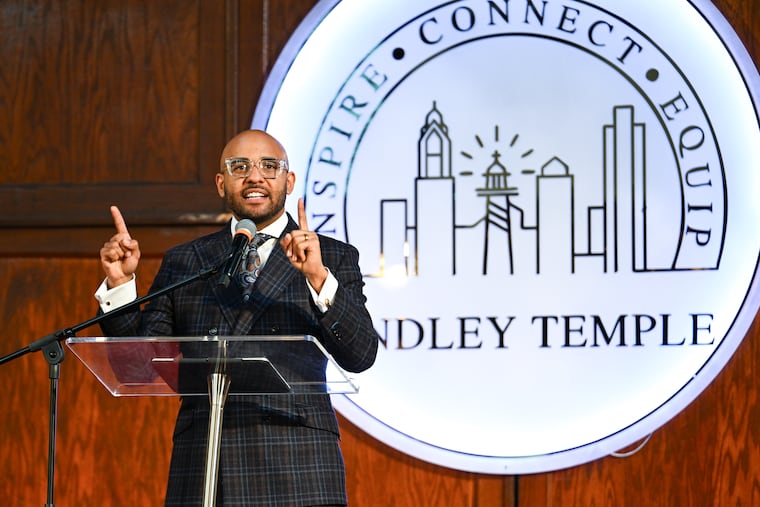
Tindley Temple commemorates Black history, highlighting themes of resistance and resilience.
Hundreds gathered at Tindley Temple United Methodist Church in South Philadelphia on Saturday to observe Black History Month and reflect on the rich legacies of African Americans. This congregation celebrated amidst ongoing efforts to preserve the history of enslaved individuals at the President’s House Site, which has recently faced challenges related to the exhibition of its historical displays.
The event was notably led by John T. Brice, the church’s lead pastor, who emphasized the significance of Black history as not only a cultural heritage but also as a means of collective protection against historical erasure. Brice underscored the importance of remembering and confronting the narratives that shape American history, asserting that “when there is pressure to erase or water down our story, remembering becomes our resistance and resilience.”
Tindley Temple, named after the Rev. Charles Albert Tindley, a pivotal figure in African American history known for composing an early version of the civil rights anthem “We Shall Overcome,” continues to serve as a rallying point for community activism and cultural memory. Brice advocates for a comprehensive recounting of the nation’s past, stressing that Black Americans’ contributions must be recognized throughout the entire year, not just during the designated month of February.
Recent developments at the President’s House Site drew further attention during the celebration. The site, which previously showcased exhibits detailing the experiences of enslaved people, has undergone recent litigation related to the removal and restoration of its displays. Brice lamented that contributions of Black individuals are frequently minimized or omitted in educational materials and public discourse, calling for stronger representation of their histories.
Timothy Welbeck, director of the Center for Anti-Racism at Temple University, reinforced the importance of acknowledging the painful aspects of American history. He remarked on the necessity of recognizing that the nation’s founding families were intertwined with the institution of slavery, a legacy that profoundly impacts contemporary society. According to Welbeck, honoring this history is fundamental in the quest for equality and recognition of humanity across racial lines.
The gathering also resonated with young attendees, including 22-year-old Shakara Wilson-Fernandez, who expressed that recognizing Tindley’s contributions serves as an empowering message for future generations. Others, such as PJ Thomas, echoed the sentiment of unity amidst diversity, asserting that the celebration of Black history is vital in understanding the collective American narrative shaped by multiple cultures and experiences.
As conversations surrounding race and history continue to evolve in America, events like this at Tindley Temple offer a critical space for reflection and commitment to a more inclusive historical narrative. The ongoing discourse around the preservation of enslaved people’s histories at the President’s House serves as a reminder of the continuous fight for recognition and understanding of America’s complex past.
Media News Source