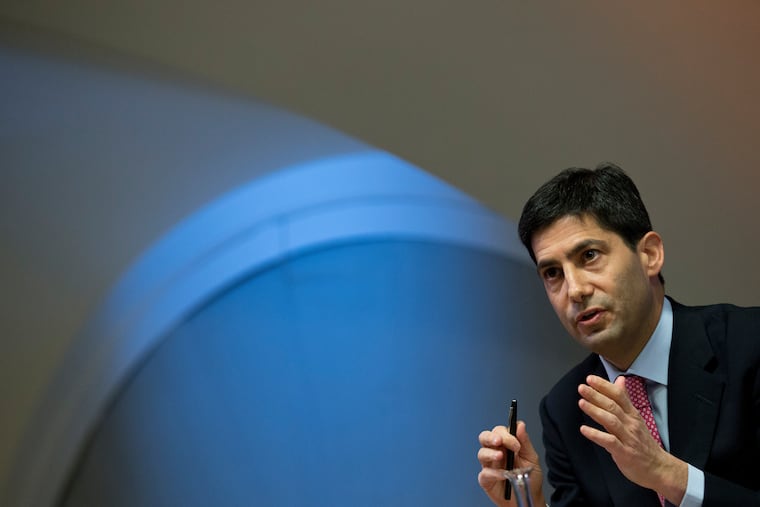
Trump anticipates his Federal Reserve appointment and AI advancements will replicate the 1990s economic boom, though economists express skepticism.
In recent discussions surrounding economic policy, the Trump administration has expressed a hopeful outlook regarding the potential of artificial intelligence (AI) to replicate the economic boom witnessed in the late 1990s. With an aim to invigorate economic growth, President Trump, along with his Treasury Secretary and his nominee for Federal Reserve chair, has placed significant emphasis on AI’s capacity to enhance productivity, reminiscent of the technological advancements that accompanied the internet revolution of the era.
The administration believes that a shift towards lower interest rates, championed by Trump’s Fed chair nominee Kevin Warsh, could catalyze economic dynamism. Trump has been openly critical of current Fed Chairman Jerome Powell, whose cautious approach to interest rate cuts—despite inflation levels hovering above the central bank’s target—has drawn the president’s ire. Treasury Secretary Scott Bessent has voiced the administration’s desire for a Fed chair imbued with what he termed a “Greenspan-like mind.” Greenspan, the former Fed leader credited with navigating the late 1990s economic landscape, was known for his ability to stimulate growth while maintaining low inflation.
However, many economists are skeptical about the congruence of past economic paradigms with today’s landscape. The economic climate of the 1990s was markedly distinct, and reliance on a past model could be misleading. Critics argue that the narrative being advanced by the Trump administration, which emphasizes low interest rates as the sole driver of the ’90s boom, fails to account for multiple factors that contributed to that economic era, including shifting productivity metrics and fiscal policies.
Despite the Trump administration’s optimistic stance, the complexities of the current economic environment may not permit a straightforward replication of that timeframe. While productivity gains from AI hold potential, experts caution that translating technological advancements into immediate economic growth may take time. Historical precedents suggest that significant changes in corporate behavior take time to manifest, particularly in a context marked by considerable investment needs.
The economic implications of AI are vast, potentially allowing companies to operate with greater efficiency and thus bolstering overall economic growth without stoking inflation. Yet this optimism is tempered by the reality of existing financial pressures and governmental borrowing, which starkly contrast with the budgetary circumstances of the late 1990s.
As political and economic conditions continue to evolve, the path forward for U.S. monetary policy under new leadership remains uncertain. Challenges such as de-globalization and rising trade barriers complicate the pursuit of a favorable economic environment, further underscoring the need for prudent and adaptable fiscal strategies that acknowledge the unique characteristics of today’s economy.
The complexities arising from this confluence of factors demonstrate the intricate balance that policymakers must navigate as they strive to harness the potential of AI without repeating the mistakes of the past. As discussions continue, the forthcoming confirmation vote for Warsh as chair of the Federal Reserve could mark a pivotal moment in U.S. economic policy-making going forward.
Media News Source