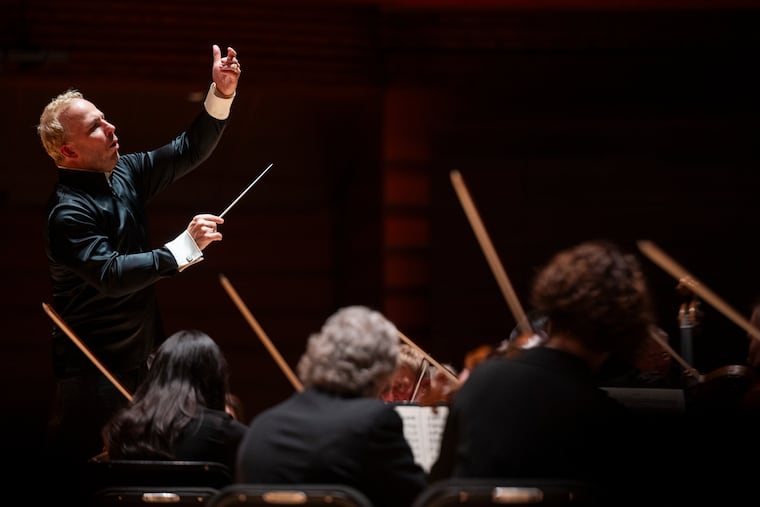
Philadelphia Orchestra’s Yannick Nézet-Séguin champions Florence Price’s music amid criticism of his Vienna performance labeled as a ‘forgery.’
Yannick Nézet-Séguin, the music and artistic director of the Philadelphia Orchestra, has fervently championed the works of Florence Price since his tenure began in the city. Notably, a recording of Price’s First and Third symphonies earned both Nézet-Séguin and the orchestra their first Grammy Award in 2022, marking a significant milestone in the ensemble’s history.
Since then, Nézet-Séguin has sought to elevate Price’s legacy, particularly given her status as the first Black woman whose works were performed by a major U.S. orchestra when the Chicago Symphony Orchestra showcased her music in 1933. His advocacy reached a new pinnacle when he included Price’s name in the upcoming Vienna Philharmonic’s 2026 New Year’s concert, featuring a piece titled “Rainbow Waltz.” However, this inclusion has sparked controversy among critics and music historians.
Despite the title, the arrangement of “Rainbow Waltz” by Wolfgang Dörner has come under scrutiny, with experts suggesting that it diverges significantly from Price’s original composition. Some critics assert that the musical piece presented at the concert fails to capture the essence of Price’s melodies, harmonies, and rhythms, raising concerns over the integrity of the arrangement. Scholar John Michael Cooper categorized Dörner’s interpretation as “forgery,” highlighting that it lacks the characteristics of Price’s musical style, which is rooted in a distinctively American voice.
This debate has garnered traction across social media platforms and specialized discourse among classical musicians, amplified by articles in prominent publications like The Guardian. Katherine Needleman, an oboist and professor at the Curtis Institute of Music, questioned the legitimacy of attributing the Dörner arrangement to Price, citing music rights agencies that list the piece as public domain.
As the controversy unfolds, Dörner’s arrangement of “Rainbow Waltz” has achieved considerable streaming success. Needleman has urged clarification regarding authorship and financial recompense, questioning whether the recognition attributed to Price might verge on exploitation if the arrangement does not authentically represent her musical work.
The upcoming world premiere of Valerie Coleman’s orchestration of Price’s “Rainbow Waltz,” conducted by Nézet-Séguin at the Philadelphia Orchestra in the following season, offers a renewed opportunity to explore and celebrate Price’s original compositions. This initiative underscores the orchestra’s commitment to spotlighting historically overlooked composers and expanding the repertoire within orchestral music. While the dialogue surrounding the authenticity and representation of Price’s work continues, it reflects broader discussions regarding inclusivity and recognition in classical music.