Philly Firm Uses Role Play from Theater to Enhance Workplace Dynamics and Team Collaboration.
In a bid to enhance soft skills among professionals, innovative training programs are being embraced by various organizations. One such initiative is Seagrass, developed by the Philadelphia marketing firm Octo Design Group. This program employs immersive role-playing scenarios where participants are thrust into simulated workplace challenges, prompting them to develop essential interpersonal skills.
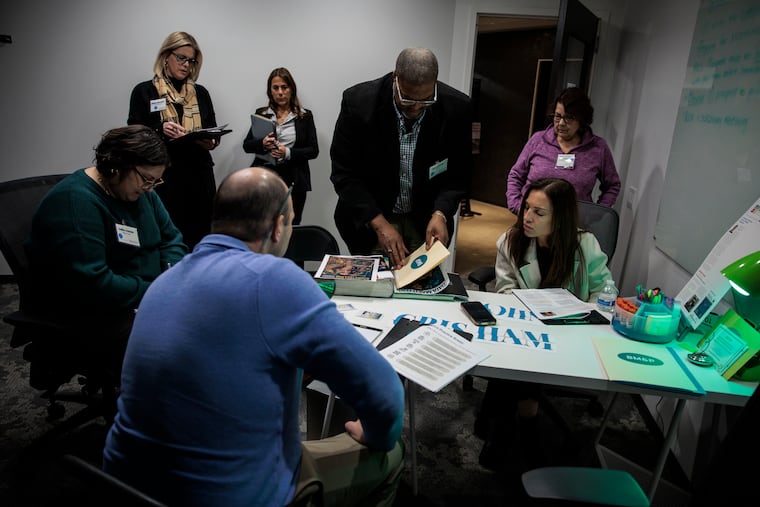
An example of Seagrass in action involved employees from Spark Quality Support Center. Tasked with acting as travel agents, these 28 team members were required to craft a vacation package for a hypothetical family, facing numerous challenges, including age restrictions and sibling dynamics. The exercise required them to collaborate effectively, strategize, and adapt their pitches, breaking down barriers that typically separate different teams within the organization. Julie Beamon-Jackson, a project director at Spark, noted the activity’s effectiveness in fostering inter-team communication.
Wendy Verna, the founder and president of Octo Design Group, initiated these workshops after observing a need for enhanced soft skills in the workplace. Despite the success of various marketing campaigns, she found clients struggled with fundamental customer interactions, such as asking the right questions, converting leads, and suggesting additional services. Verna emphasized that soft skills are crucial to improve sales approaches and overall customer satisfaction.
Seagrass sessions are designed to create a dynamic learning environment that mimics real-world pressures, enabling participants to experience both successes and failures in a safe space. Participants engage in scenarios resembling escape rooms, where each situation tests their ability to navigate challenges collaboratively. Although the program is a significant investment, with a two-hour session starting at ,500, many organizations view it as a necessary expenditure for cultivating a skilled workforce.
Recent observations have highlighted a generational shift in professional interactions due to the pandemic, where in-person communication has dwindled. Experts like Maurice Schweitzer from Wharton School argue that these soft skills are essential yet often overlooked. The ability to effectively communicate, negotiate, and engage with colleagues is increasingly vital in a post-pandemic work culture that favors hybrid models.
As organizations seek to bridge the skills gap among young workers, programs like Seagrass illustrate a proactive approach to professional development. By fostering environments conducive to practice and feedback, companies may increasingly recognize the importance of soft skills in achieving both individual and organizational success. The motto “the future needs more than degrees” encapsulates the pressing need for competencies beyond formal education, marking a transformative shift in workplace expectations.
Media News Source concludes that as the workplace continues to evolve, investing in the development of soft skills has never been more critical, positioning employees for success in an increasingly competitive landscape.