
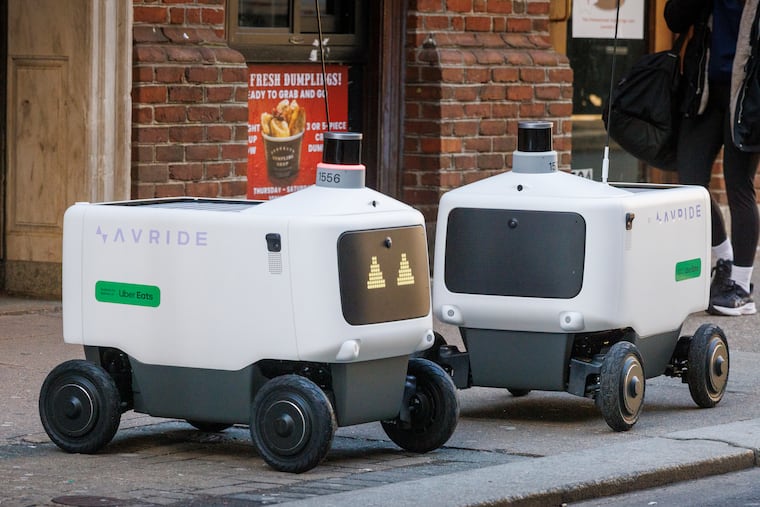
Philadelphians disrupt Uber Eats delivery robots, echoing past incidents with hitchBot.
A recent incident in Philadelphia highlights the contentious interaction between local residents and autonomous delivery robots. Over this past weekend, a delivery robot from Uber Eats was toppled by a bystander during a lively karaoke session aboard a mobile trolley, capturing attention online. This event marks a troubling chapter in the robot’s brief existence, as it had only been operational in the city for 18 days before encountering such hostility.
The incident unfolded in Center City, where the karaoke trolley patrons recorded the action on video, showcasing the growing trend of residents engaging with the robotic delivery fleet in unexpected and often destructive ways. This is not an isolated event; only weeks earlier, a pedestrian was filmed sitting atop an Uber Eats delivery robot during a similar interaction. Such occurrences are raising questions about the reception of technology within urban environments, particularly in a city known for its unique relationship with automated systems.
The robot delivery service, operated by the company Avride, has added Philadelphia to its list of active locations, although the rollout seems fraught with challenges. Residents of the city are steadily becoming more familiar with the robotic units, identifiable by their characteristic blinking eyes, yet the response has been mixed. There is a growing sentiment of skepticism among Philadelphians, with some perceiving these devices as intrusive and comparing them to surveillance tools. This comes despite assurances from Uber that the robots operate independently and do not resemble human delivery personnel.
In historical context, this latest disruption recalls the fate of HitchBot, a hitchhiking robot that was famously damaged in Philadelphia in 2015 after successfully traveling through several countries. Such incidents of ‘robot hazing’ seem to persist a decade later, with public engagement revealing a blend of curiosity and defiance toward the introduction of autonomous technology.
The Philadelphia Police Department has stated that while it is not actively investigating the recent incidents, individuals could face charges for vandalism if damage is determined to be significant. This legal backdrop coincides with a lack of specific regulations governing the operation of delivery robots in the city, contrasting with state legislation that classifies such devices as “personal delivery devices” akin to pedestrians.
As the city navigates the complexities brought on by the integration of self-driving technology, residents continue to grapple with their comfort and acceptance of these innovations. Philadelphia has thus become a focal point in discussions around the social implications of technology and the evolution of public space in an increasingly automated future.


