Fort Mifflin receives support after prolonged struggles with flooding and financial issues.
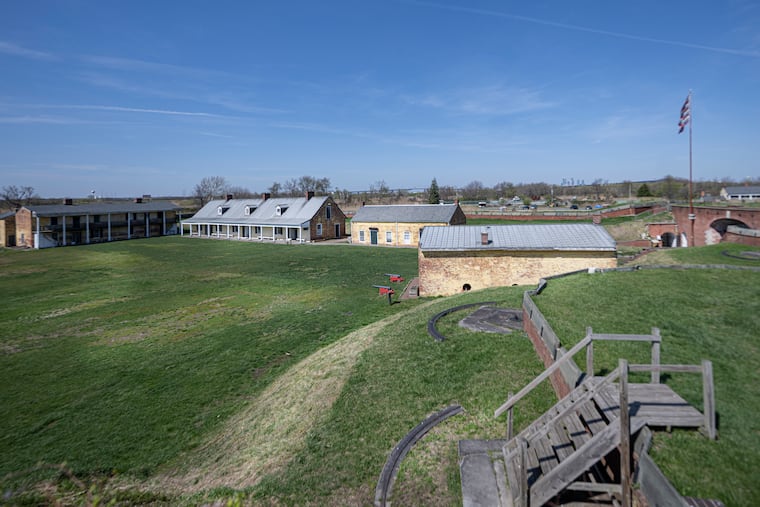
Fort Mifflin, perched on the banks of the Delaware River, stands as a testament to Philadelphia’s rich history. This site, renowned for enduring intense bombardment during the American Revolution—reportedly absorbing close to 1,000 cannonballs an hour over six days—has also fulfilled various roles since its establishment, including serving as a Civil War prison camp for the initial captives from the Battle of Gettysburg.
Despite its historical significance, Fort Mifflin operates without federal or city financial support, surviving on an annual budget that fluctuates between 0,000 to 0,000. The allocation of funds heavily depends on visitor payments and fundraising endeavors, which puts the fort’s operations on a precarious financial footing.
Craig Buffington, the executive director of Fort Mifflin, describes the facility’s funding situation as “a shoestring budget.” The fort’s geographical isolation is a contributing factor to its struggle for foot traffic compared to more accessible historical attractions in the city. Located on Mud Island, the fort faces persistent flooding issues exacerbated by rising sea levels, leading to deteriorating infrastructure. Concerns include bowed brick exteriors, rotting wood, and a pedestrian bridge that shows signs of distress.
Addressing these chronic issues begins with a new tide gate, expected to significantly alleviate flooding effects. This gate, originally constructed in 1920, has suffered from years of neglect, allowing rising tides to inundate the fort’s grounds and impair accessibility. The project, budgeted at .15 million, is currently anticipated to commence under the directive of Philadelphia International Airport (PHL).
Buffington highlights that the new tide gate is crucial for managing water levels and ensuring dry land at the fort. The structure is designed to improve conditions significantly, as Fort Mifflin is uniquely situated in a bowl-like formation, making it prone to flooding whenever high tides occur.
However, the challenges facing Fort Mifflin extend beyond flooding. Buffington notes extensive deferred maintenance needs. With a balance of approximately 4,340 reported in 2023, the facility continues to operate independently. The hospital building, which dates back to 1824, has experienced substantial water damage, necessitating makeshift solutions such as a bridge constructed by staff for access during flood events.
Moreover, the commandant’s house, designed by noted architect Pierre Charles L’Enfant, requires an estimated million to restore following fire damage that occurred decades ago. Despite the historical charm and ongoing efforts to enhance visitor experiences—including public events and private investigations into its reputed hauntings—funding for necessary repairs remains elusive. Buffington cites difficulty obtaining grants compounded by federal budget cuts, remarking that no financial assistance is provided from local or state authorities.
Despite these challenges, Fort Mifflin remains a vibrant destination for historical reenactments, educational tours, and cultural events, attracting many visitors weekly. Plans for events such as an upcoming speakeasy and author days showcase the fort’s commitment to augmenting its financial viability while preserving its historical legacy. Airplane enthusiasts also frequently visit to enjoy the unique vantage point the site offers over nearby Philadelphia International Airport.
As Fort Mifflin continues to combat the impacts of climate change, flooding, and financial shortfalls, the historical landmark’s future hinges on community support and innovative preservation strategies.