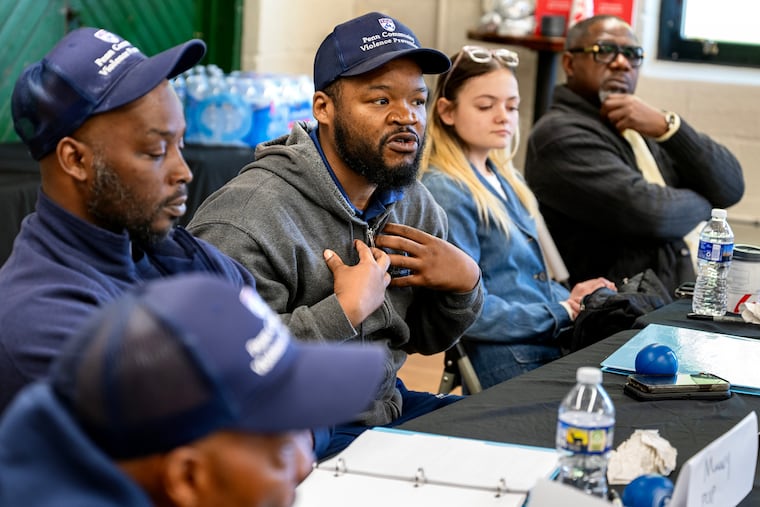
City invests in training community violence interrupters to help reduce crime.
Andre Martin, a 51-year-old resident from South Philadelphia, recounted a potentially violent incident from his youth while incarcerated that was de-escalated by a former gang member serving as his counselor. This pivotal moment, he reflected, fundamentally altered the trajectory of his life and contributed to his current role as an outreach worker with Penn Community Violence Prevention. Martin shared his experience during a gathering in Northwest Philadelphia aimed at launching the Peacekeepers Institute, a new program developed by the city’s Office of Public Safety. This eight-week initiative seeks to unify and enhance the training of those engaged in Philadelphia’s varied community violence intervention efforts.
Approximately 25 participants from organizations, including the Pennsylvania Anti-Drug/Anti-Violence Network (PAAN) and Kensington’s Cure Violence, convened to discuss programs that address a growing national concern—community violence. These intervention programs, which have garnered significant federal funding during the Biden administration, aim to mitigate gun violence by deploying “credible messengers.” These individuals work to engage at-risk populations through conflict mediation and social support, thereby seeking to prevent crime without police involvement.
However, recent policy shifts under the Trump administration have cast uncertainty on the future of such programs. The closure of the Office of Gun Violence Prevention and a redirection of funding towards law enforcement agencies have left grassroots organizations like the New Kensington Community Development Corporation facing challenges, notably the loss of a vital .5 million federal grant meant to expand outreach efforts.
Despite these setbacks, the Public Safety Office has allocated around million to community violence intervention groups since 2021, underscoring their commitment to these initiatives. Adam Geer, the director of Public Safety, emphasized the administration’s resolve to support these programs, reiterating their value to the city’s residents.
As the community grapples with shifting crime rates, there is cautious optimism. The murder rate in Philadelphia has experienced a notable decline, reaching a low not observed since the 1960s, with just 34 homicides reported in 2026 compared to previous years. This improvement has been attributed to various factors, including the efforts of community violence intervention organizations. Studies, such as one from the University of Pennsylvania, indicate that a single intervention from credible messengers reduced gun violence among participants by approximately 36%.
During the Peacekeepers Institute’s opening session, attendees were urged to remain vigilant and proactive in their anti-violence work despite the recent reduction in crime. George Mosee, executive director of PAAN, highlighted Philadelphia’s historical role as a leader in anti-violence efforts, a legacy that traces back to the 1970s and evolved significantly through various crises, including the crack epidemic of the 1980s.
Participants acknowledged the need to consolidate recent progress to prevent a resurgence of violence. However, they also recognized the challenges of quantifying success in their field, highlighting the difficulty in attributing specific outcomes to community outreach efforts. While large-scale studies on the effectiveness of these intervention programs are limited, those involved report a tangible impact, often sharing anecdotes of lives changed and violence averted through their work.
As the Peacekeepers Institute continues to operate, its emphasis on conflict de-escalation and personal wellness aims to empower community outreach workers to enhance their skills and efficacy in fostering safer neighborhoods.