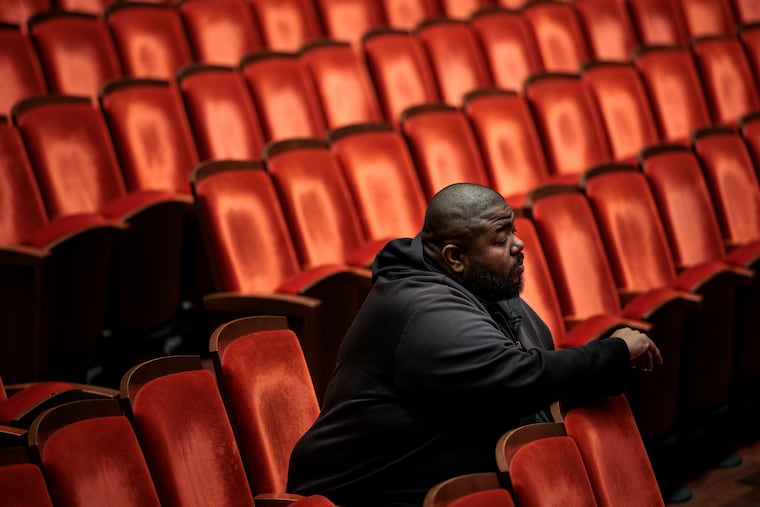
Tyshawn Sorey, acclaimed musician, rejects genre labels while continuing to produce exceptional music in both jazz and classical styles.
Introducing the world premiere of “For Marilyn Crispell” earlier this month, conductor Yannick Nézet-Séguin hailed Tyshawn Sorey’s new composition for piano and orchestra as a remarkable achievement in contemporary music. Sorey, an innovative force within the musical landscape, has been serving on the faculty at the University of Pennsylvania since 2020 and has garnered acclaim for his distinctive blend of styles. His recent work, dedicated to renowned pianist Marilyn Crispell, reflects a growing trend in which boundaries between jazz and classical music continue to dissolve.
Sorey’s artistic journey has been marked by significant recognition. In 2017, he received the prestigious MacArthur Fellowship, commonly referred to as the “Genius Grant,” and in 2024, he was awarded the Pulitzer Prize for Music for his piece “Adagio (for Wadada Leo Smith).” Known for his versatility, Sorey’s oeuvre encompasses a wide array of genres, with his albums frequently recognized as groundbreaking contributions to modern jazz.
The complexity of Sorey’s music lies in its refusal to conform to traditional categorizations. He has been commissioned to compose for the Philadelphia Orchestra and has spent three years as a resident composer with Opera Philadelphia. His previous work, “Monochromatic Light (Afterlife),” is inspired by the Rothko Chapel in Houston and reflects his capacity to transcend stylistic definitions. Sorey embodies a philosophy of artistic cross-pollination, blending various musical traditions without the constraints of preconceived notions.
“For Marilyn Crispell,” explored through the lens of a 30-minute composition, celebrates the artistic collaboration between pianist Aaron Diehl and the orchestra. The piece unfolds at a leisurely pace, demanding synchronicity between the musicians, which Nézet-Séguin notes creates an immersive experience for both the performers and the audience.
Sorey’s profound commitment to interpretation distinguishes his work. He emphasizes the importance of authenticity in musical expression, whether engaging with blues, jazz, or hip-hop. His dedication to patience and deep inquiry in performance is shared by Diehl, who reflects on how Sorey’s approach has transformed his understanding of time and engagement in music.
The recent performance at the Annenberg Center, featuring Sorey’s reinterpretation of Max Roach’s influential 1968 album “Members, Don’t Git Weary,” serves as a stark contrast to “For Marilyn Crispell.” The latter requires intense patience and unity between performers, while the former is characterized by a sense of urgency and exploration of politically charged themes, reflective of contemporary societal challenges.
Through “Members, Don’t Get Weary,” Sorey addresses the relevance of historical struggles faced by Black Americans, drawing parallels to present-day issues. His works encapsulate not only artistic intent but also social commentary, resonating deeply with modern audiences seeking both inspiration and reflection in these tumultuous times. The duality in Sorey’s compositions signifies a meaningful evolution in music, advocating for a holistic understanding of cultural and temporal narratives.
As Sorey continues to redefine the boundaries of artistic expression, his contributions resonate far beyond the concert hall, challenging and inviting listeners to engage with the complexities of today’s musical and social landscapes.
Media News Source