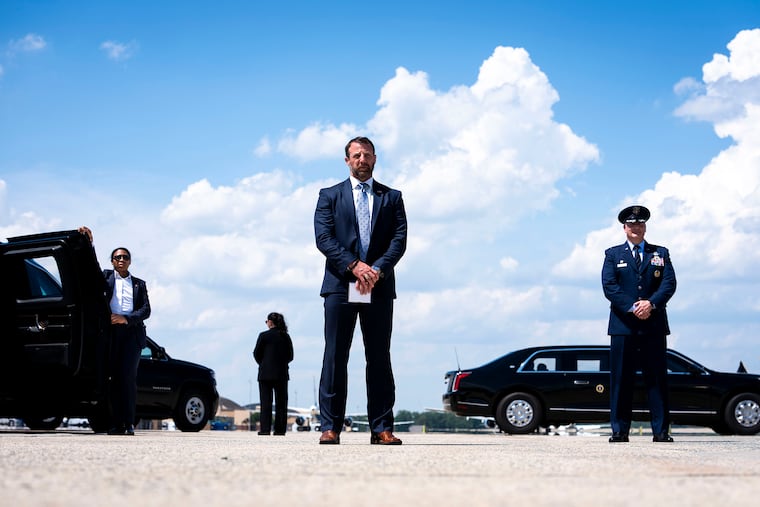
Business groups warn that removing customs from sanctuary city airports would lead to significant disruptions and chaos.
Travel Industry Expresses Alarm Over Proposed Customs Officer Removal in Sanctuary Cities
In a move that has drawn the ire of travel industry leaders and business stakeholders, Homeland Security Secretary Markwayne Mullin has proposed the removal of customs officers from airports located in jurisdictions designated as “sanctuary cities.” Critics assert that this controversial proposal could disrupt air travel operations and damage the economy surrounding major U.S. airports.
Mullin’s idea, first mentioned during cable television interviews, aims to penalize cities that limit collaboration with federal immigration enforcement. Sanctuary cities, by definition, are jurisdictions that have policies in place to protect undocumented immigrants from deportation and reduce local law enforcement’s cooperation with federal immigration authorities. The intended policy shift underscores the ongoing tensions between federal immigration enforcement and local governance.
Customs officers play an essential role in regulating the flow of goods and passengers at international airports. Their removal would render these airports unable to handle incoming international flights, a scenario that would create significant logistical challenges for travelers and the transportation network. A coalition of influential organizations—including the U.S. Travel Association and the U.S. Chamber of Commerce—issued a stern warning that any reduction in Customs and Border Protection (CBP) operations could lead to substantial chaos in the air transportation system across the nation. They highlighted that repercussions at even a few gateway airports could have a cascading effect throughout the broader aviation infrastructure.
Transportation Secretary Sean Duffy echoed these concerns during a recent House Appropriations subcommittee hearing. He emphasized the necessity of maintaining open routes for travelers worldwide, arguing against the politicization of air travel based on local political disagreements.
While the White House has not officially backed Mullin’s proposal, the Department of Homeland Security has refrained from commenting, aside from reiterating Mullin’s statements. Nonetheless, Mullin has continued to advocate for his plan, suggesting that it would be a rational response to cities that resist federal immigration enforcement.
Travel industry officials warn that the ramifications of such a policy could be profound. Eighteen airports in locations identified as sanctuary cities—including major hubs in Philadelphia, Boston, New York, and Los Angeles—cater to approximately 68 million passengers annually, generating significant economic benefits. For instance, a complete suspension of customs operations at Newark Airport could threaten around billion in travel revenue and hinder roughly 0 million worth of daily imports. As Newark prepares for a surge of visitors for upcoming summer events, including World Cup soccer games, the stakes have only increased.
The travel industry provides estimates suggesting that a comprehensive shutdown of customs operations in sanctuary cities could jeopardize over billion in U.S. economic activity. This presents concerns about potential strain on the air travel system, which is already coping with capacity challenges.
Moreover, Mullin’s recent announcements appear contradictory to the Biden administration’s previous attempts to enhance customs operations, as evidenced by a recent public health initiative aimed at screening travelers from areas impacted by Ebola at Kennedy Airport.
Mullin did clarify that the focus of his proposal may not extend to all sanctuary cities, with Newark identified as a primary target. He signaled urgency in implementing a policy shift if cooperation does not improve, illustrating the fraught intersection of immigration, politics, and travel infrastructure in the United States.
As discussions regarding airport custom operations unfold, the future landscape of air travel remains uncertain for both the travel industry and millions of passengers who rely on these critical transport hubs.
Source: Media News Source